On June 9, Anthropic released Claude Fable 5, the most capable AI model it has ever made available to the general public. The headlines are about benchmark records and a 50-million-line code migration done in a day. The more useful question for a business owner is quieter: does this change anything for the way I run my company?
Short answer: not overnight, but it lowers the cost and effort of work that used to be too expensive to automate. Here is what actually happened, with the hype removed, and what it means if you run a small or mid-sized business.
What Anthropic actually released
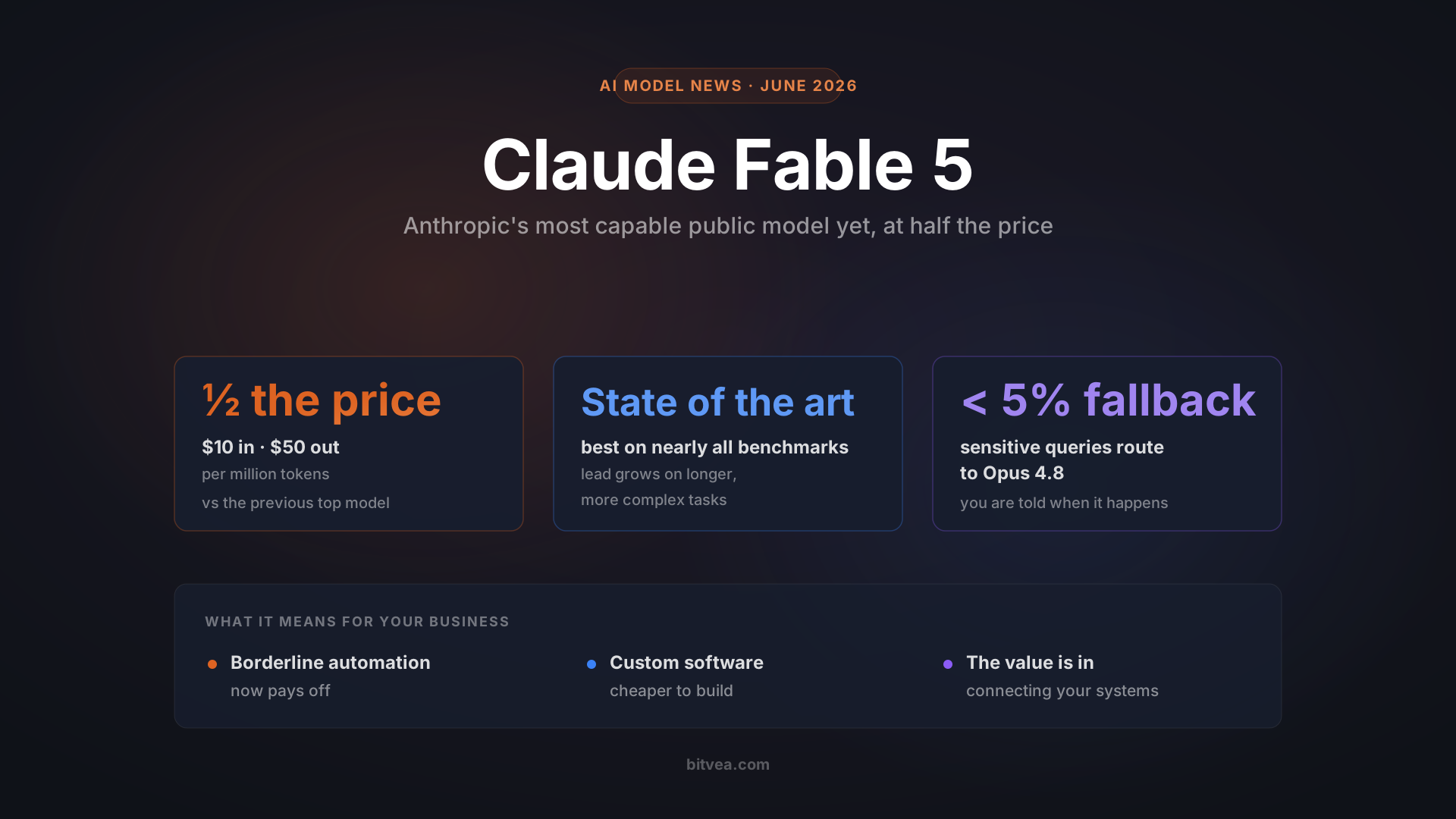
Claude Fable 5 is a new top tier of AI model, a step above the previous Opus class. Anthropic calls it state-of-the-art on nearly all the benchmarks it tested, and says the lead grows the longer and more complex the task gets. Two numbers stand out for non-technical readers:
- Price. Fable 5 costs $10 per million input tokens and $50 per million output tokens, which Anthropic says is less than half the price of its previous top model. More capability for less money is the part that matters for budgets.
- A real example. During early testing, Stripe reported that Fable 5 ran a migration across a 50-million-line codebase in a single day. By hand, that work would have taken a team more than two months.
There is also a sibling model, Claude Mythos 5, but it is restricted to a small group of cybersecurity and research partners. For everyday business use, Fable 5 is the one that ships.
The catch worth knowing before you budget
Two details deserve a flag, because they affect planning.
First, the price is genuinely lower, but the rollout is staged. On Anthropic's Pro, Max, Team, and seat-based Enterprise plans, Fable 5 is included at no extra cost only through June 22. From June 23, using it on those plans will draw on usage credits until capacity allows Anthropic to fold it back into the standard plans. If you are testing it this month, don't assume this week's cost is next month's cost.
Second, some requests quietly fall back to a different model. To release Fable 5 safely, Anthropic routes requests touching cybersecurity, biology and chemistry, or attempts to copy the model to a less capable model called Opus 4.8. The company says this happens in under 5 percent of sessions and tells you when it does. For most business work it will never come up, but it is worth knowing the behavior exists if you work in a regulated or security-heavy field.
What it changes for small and mid-sized businesses
A more capable, cheaper model does not solve a business problem on its own. It is an engine, not a finished system. What changes is the math on what is worth building.
Work that was borderline is now worth automating. Plenty of useful automations never got built because the AI of a year ago was not reliable enough or cost too much per run to justify the project. A model that handles longer, multi-step tasks more reliably, at a lower token price, moves some of those projects from "not yet" to "worth a look." Think document-heavy back-office tasks, drafting and review workflows, and the kind of judgment-based steps that no off-the-shelf SaaS tool handles. This is exactly the territory of AI agents and automation built around your processes.
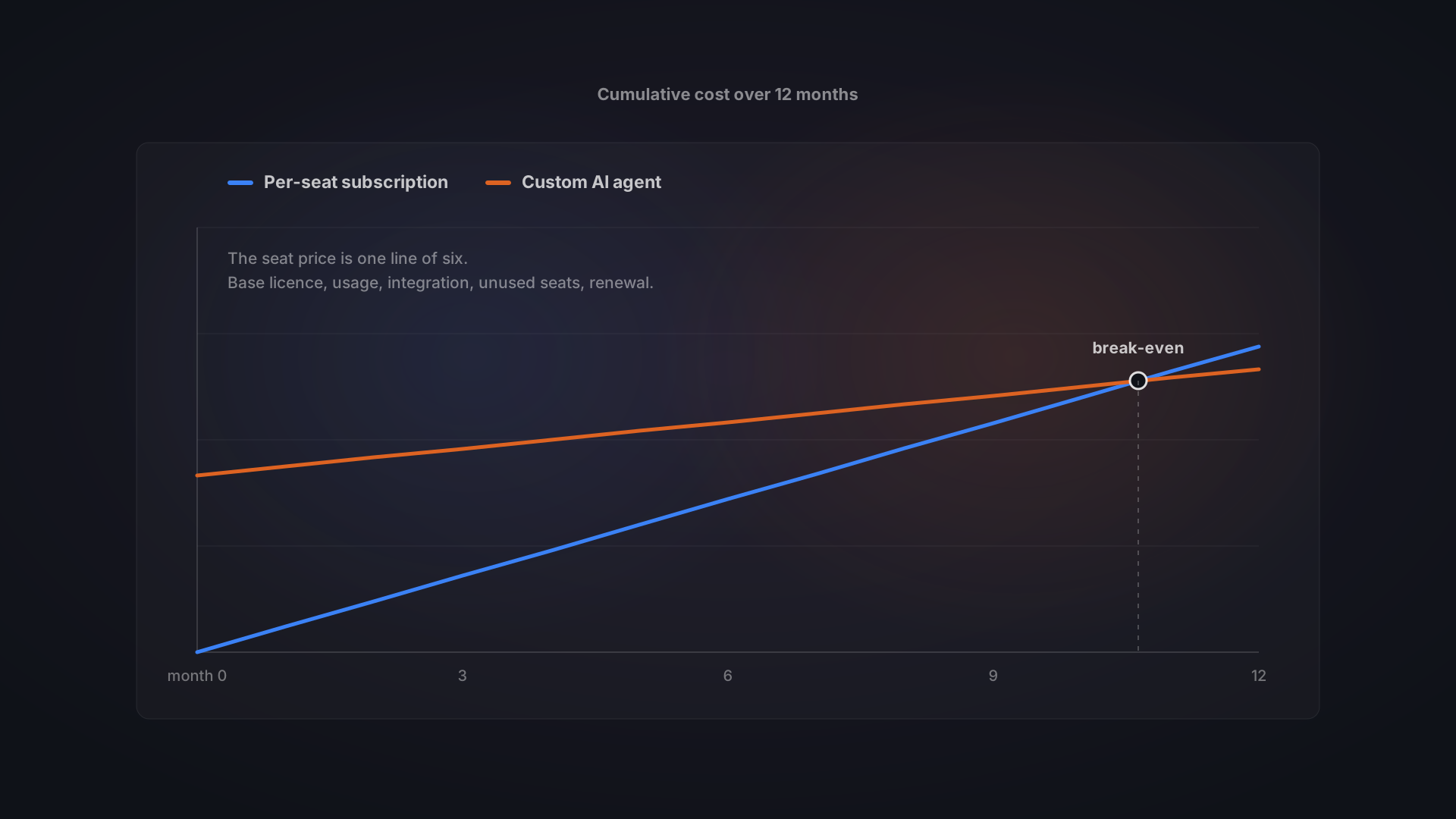
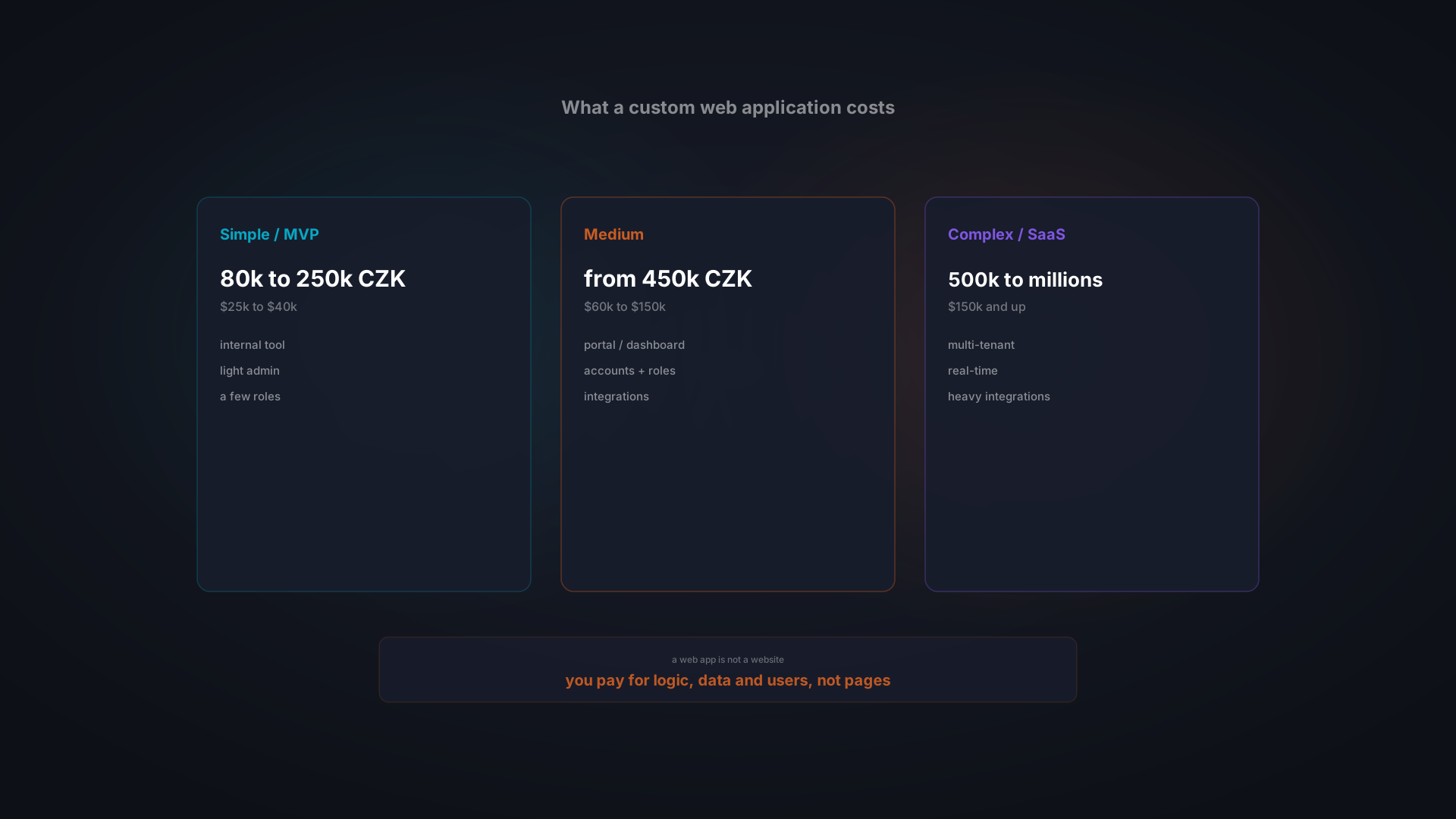
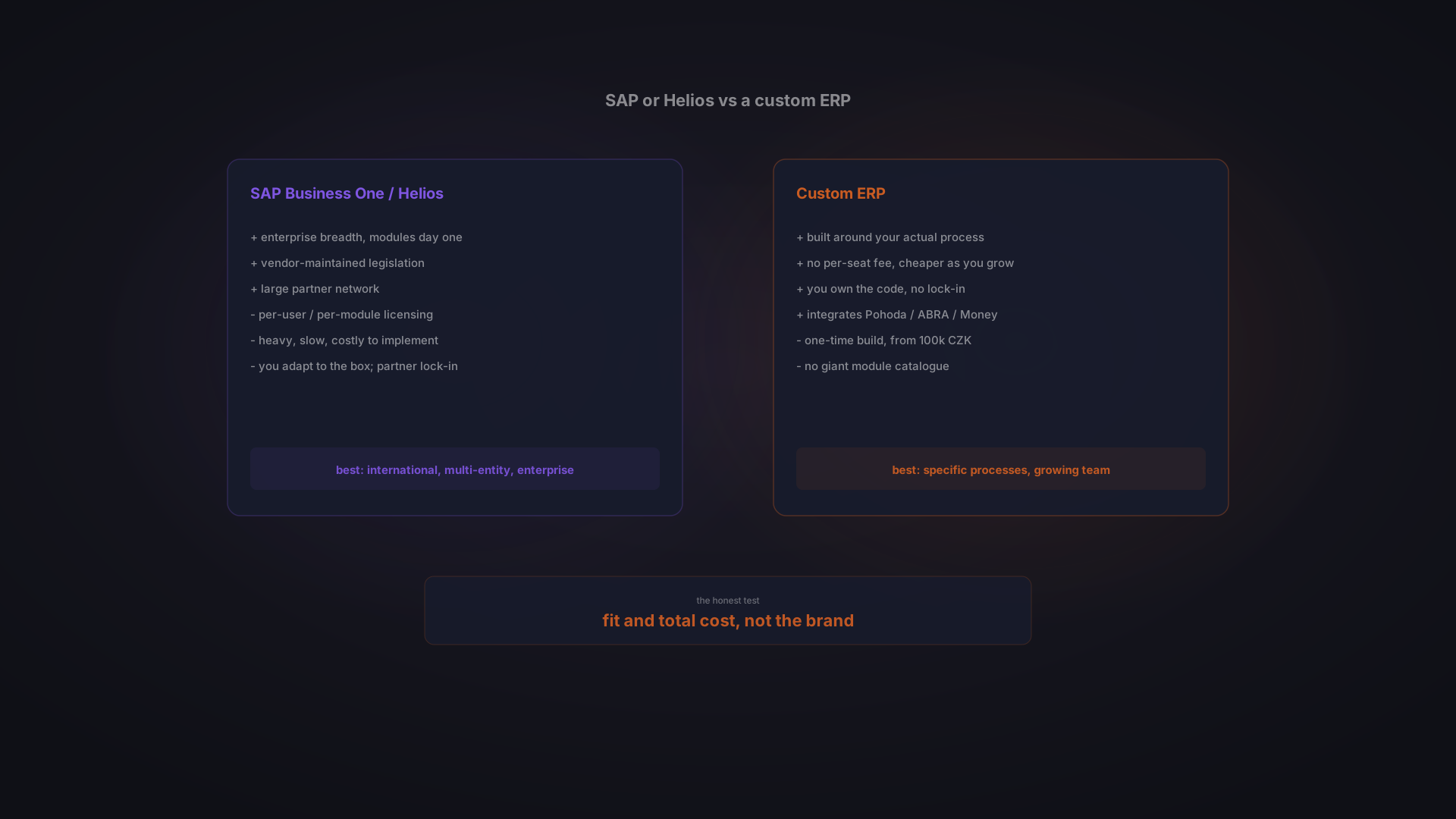
Custom software gets cheaper to build and maintain. The Stripe example is a coding story, and that is the point. Models that take on longer, more reliable engineering work reduce the hours behind a custom build. That does not turn software into a free commodity, but it does shift the cost-benefit of replacing a SaaS tool you have outgrown with custom software that fits how you actually work, and that you own outright.
The capability gap is now mostly about plumbing, not the model. The model can reason. It still cannot see your orders, your CRM, or your invoicing tool unless someone connects it. For most companies the bottleneck is no longer raw AI intelligence; it is that the data lives in separate systems that don't talk to each other. Getting value out of a model like Fable 5 usually starts with connecting the systems you already use so the AI has something real to work with.
What we would not read into it
It is worth being clear about what this launch does not mean. It does not mean you should rush to rebuild anything. A record on a coding benchmark is not the same as a result in your business, and the model getting smarter does not change the fundamentals: a tool only pays off when it fits a real workflow and someone owns the result. The sensible move is not to chase the announcement. It is to look at the one or two manual processes that quietly cost you the most hours each week, and ask whether they are now worth automating. Often the answer changed this week, even though your processes did not.
The takeaway
Claude Fable 5 is a real step up in what AI can do, at a lower price, with a few rollout caveats worth watching. For a business owner, the practical signal is simple: the cost of automating real work just dropped, and more of the projects you shelved as "too expensive" are worth a second look. The model is the easy part now. The value is in building it around how your company actually runs.
If you are wondering whether a specific process in your business is now worth automating, tell us about it. We will give you an honest read on what is worth building and what is not.