The phrase "AI agent" is everywhere in 2026, usually with little explanation of what it actually means for a normal company. Strip away the hype and it is simple: an AI agent is software that can take a goal, work out the steps, use your existing tools, and finish a task, rather than just answer a question and stop.
This guide explains what an AI agent is in plain terms, how it differs from a chatbot or older automation, what it can realistically do for a business, and where it makes sense to use one.
What Is an AI Agent?
An AI agent combines a language model (the part that understands and reasons) with access to tools and data (the part that lets it act). Give it a goal, such as "answer this customer email" or "reconcile these invoices," and it can read the relevant information, decide what to do, take the action in your systems, and check the result, looping until the task is done.
The key word is act. A chatbot talks. An agent does. The difference between "here is how you would refund that order" and actually issuing the refund in your system is the difference between an assistant and an agent.
AI Agent vs Chatbot vs RPA
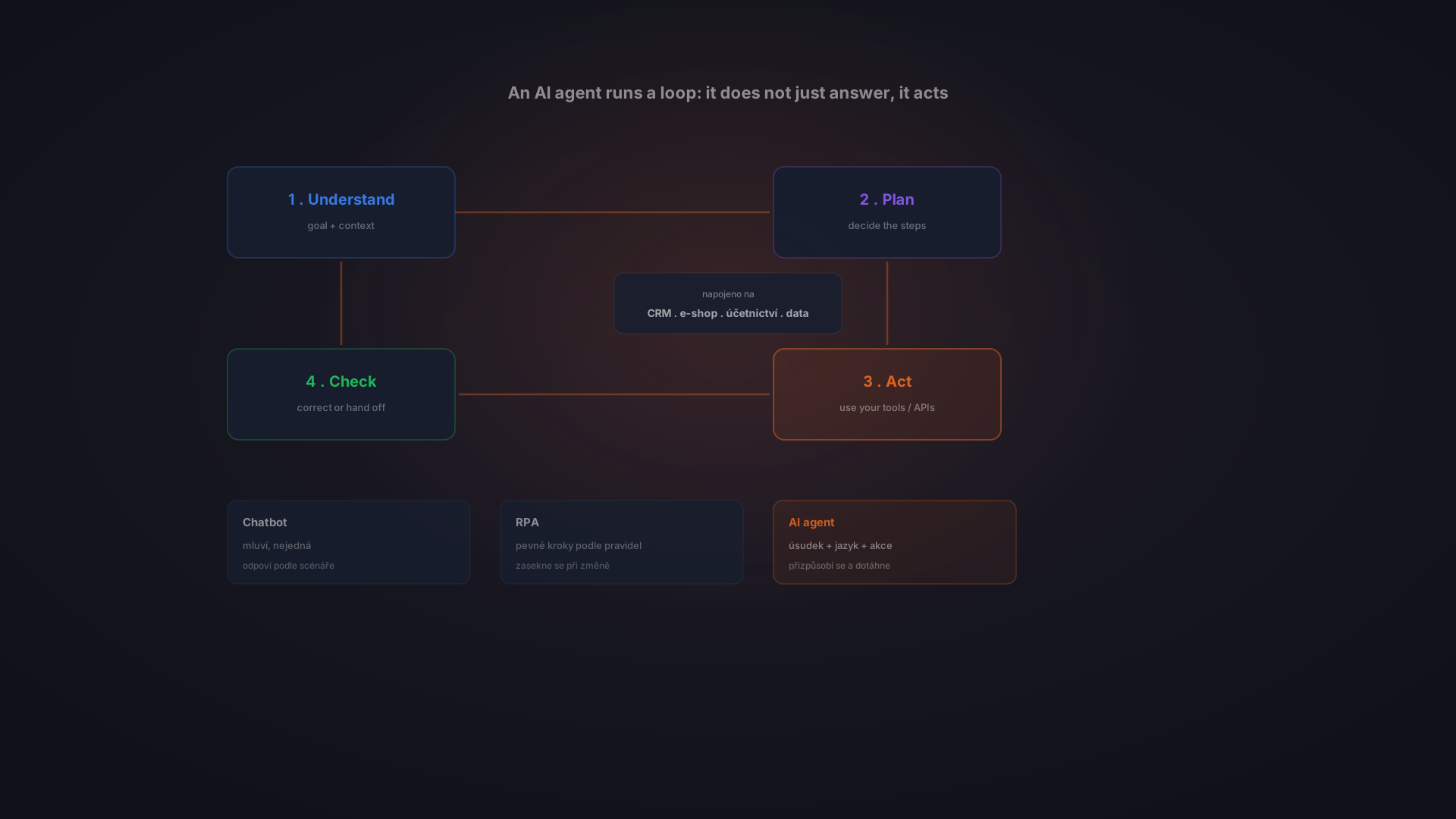
- Chatbot: answers questions from a script or a knowledge base. Useful, but it does not act on your systems.
- RPA (robotic process automation): clicks through fixed, rule-based steps. Fast and reliable, but it breaks when anything changes and cannot handle judgment.
- AI agent: understands a goal in plain language, decides the steps itself, uses tools and data, and adapts when things are not exactly as expected.
In practice the best results often combine them: an agent for judgment and language, calling reliable automated steps for the mechanical parts.
How an AI Agent Actually Works
Without the jargon, an agent runs a loop:
- Understand the goal and the context (an email, an order, a document)
- Plan the steps needed to reach it
- Act using connected tools: your CRM, e-shop, accounting, a database, an API
- Check the result and correct course if needed, then repeat or hand off to a human
The tools it can reach are what make it useful. An agent with no connection to your systems is just a chat window; an agent connected to your CRM, inbox, and warehouse can actually run a process. That connection layer is the real work, and it is covered in our API integration guide.
What Can an AI Agent Do for a Business?
- Customer support: read a ticket, find the answer in your data, draft or send the reply, escalate the hard ones
- Document and invoice processing: extract data, match it, file it, flag exceptions
- Sales and CRM hygiene: log activity, enrich records, follow up, prepare quotes
- Operations: sync data between systems, check stock, chase missing information
- Research and reporting: gather, summarize, and assemble a draft for a human to approve
For concrete small-business examples and the return they produce, see how AI agents are transforming small business.
Where AI Agents Fit, and Where They Do Not
Agents shine on high-volume, judgment-light work that touches several systems: the tasks a capable junior could do with clear instructions. They are a poor fit where a mistake is expensive and hard to reverse, where the rules are genuinely fixed (plain automation is cheaper), or where there is not enough volume to justify the setup. A good implementation keeps a human in the loop for the consequential decisions.
Frequently Asked Questions
Is an AI agent the same as ChatGPT?
No. ChatGPT is a chat interface to a language model: it talks. An AI agent uses a model like that as its brain, but adds tools, data access, and the ability to take actions in your systems, so it can finish tasks, not just discuss them.
Will an AI agent replace my staff?
Usually it replaces tasks, not people. The realistic win is taking repetitive, system-hopping work off your team so they spend time on judgment and customers. Most deployments keep people in control of the decisions that matter.
How much does an AI agent cost?
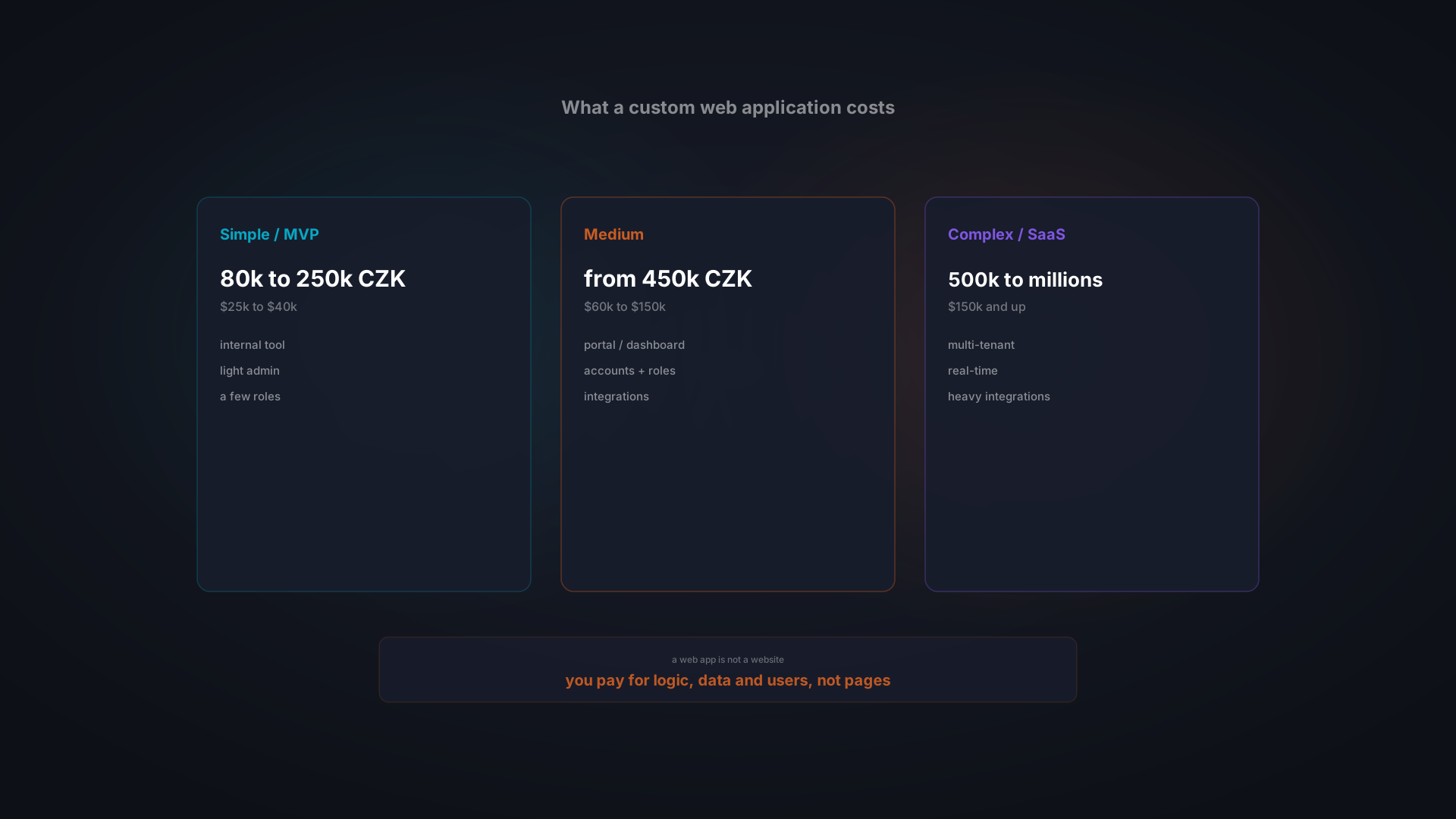
A focused automation can start from around 50,000 CZK; a fuller AI agent with several integrations usually lands higher, plus running costs for the model and infrastructure. The full breakdown is in how much an AI agent costs.
In Short
An AI agent is software that pursues a goal by reasoning, using your tools, and taking action, not just chatting. It fits high-volume work across multiple systems, with a human overseeing the decisions that count. The value comes from connecting it to your real data, not from the model alone.
Curious What an Agent Could Do for You?
We look at your actual workflows and tell you where an agent would genuinely help, and where plain automation or nothing at all is the smarter call.
Book a free consultation and we will find the best first use case together.