A custom invoicing system is worth building when off-the-shelf tools start charging you per user, refuse to connect to your ERP or warehouse, or force your billing into a shape that does not match how you actually invoice. For a small team with simple invoices, Fakturoid or iDoklad is the right answer. Once invoicing becomes a workflow across several systems and people, a system built around that workflow usually costs less and breaks less.
Most businesses do not start here. They start with Excel or a free invoicing tool, outgrow it quietly, and only notice the problem when a month-end close takes three days and two people. This guide is the honest version of that decision: what "custom" really means, the concrete signs you have outgrown a boxed tool, what Czech law your invoicing has to handle either way, and how the five-year cost actually compares.
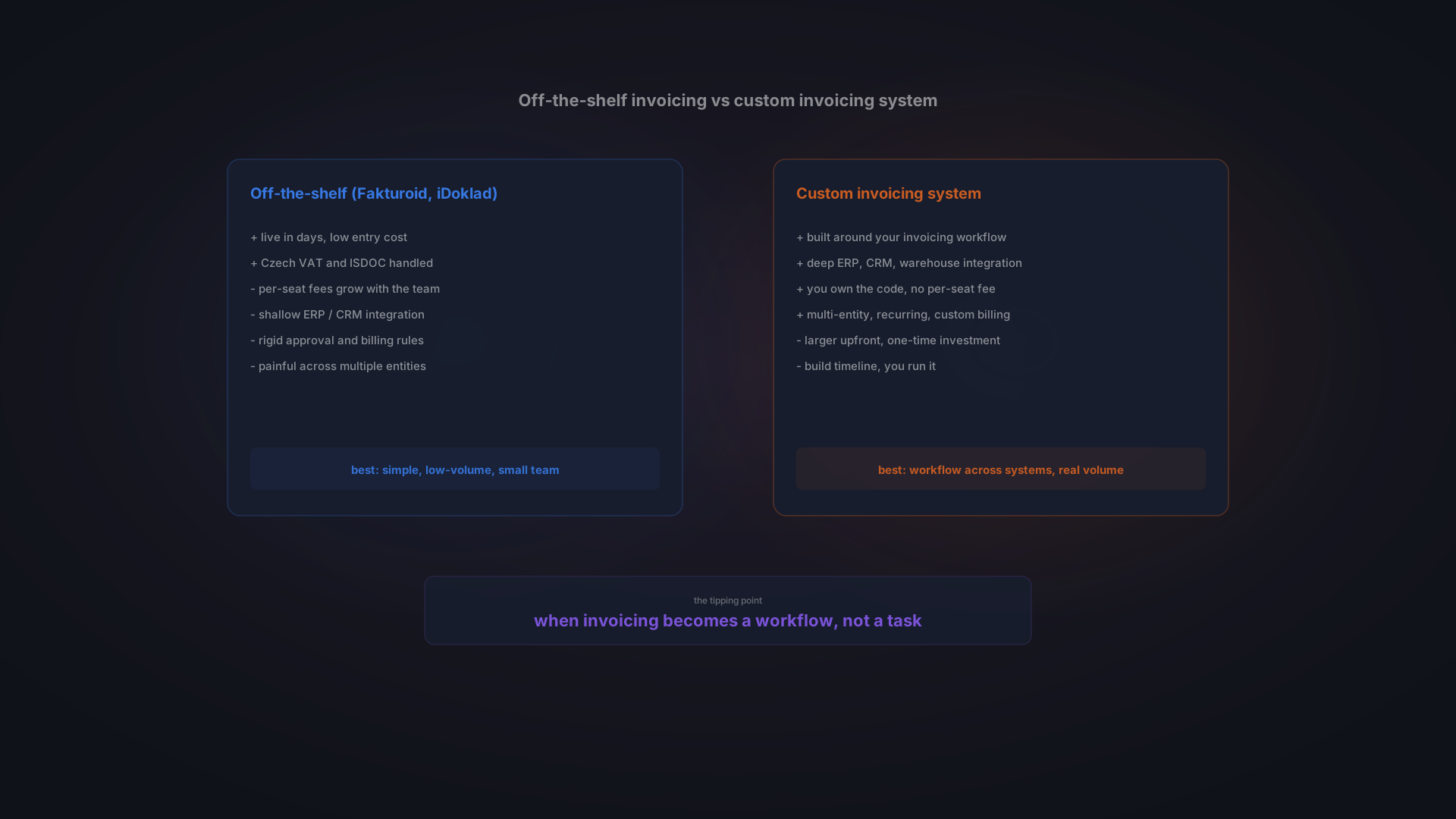
Off-the-shelf invoicing (Fakturoid, iDoklad, Excel) is the right call for simple, low-volume invoicing by a small team. Move to a custom invoicing system when per-seat fees stack up, you need real integration with your ERP or CRM, your approval or recurring billing does not fit a fixed tool, or you run multiple entities. Custom means you own the code, pay no per-seat fee, and the system fits your process. It is a one-time investment, not a subscription.
What a custom invoicing system actually means
There is a naming trap here. Most tools that advertise "custom invoicing" mean customizable templates: your logo, your colors, a few extra fields. That is still a fixed SaaS product with a fixed data model, and you still adapt your process to it.
A genuinely custom invoicing system is software built around how your company invoices. The approval steps are your approval steps. It reads orders from the system where orders already live. It issues the document types you actually use, and it books them where your accountant needs them. You own the code and the data.
The difference matters most at the edges: the invoice that needs a second approval over a certain amount, the recurring bill with a mid-month proration, the order that has to sync from your warehouse before anything gets billed. Boxed tools handle the common case well and the edge cases badly. Custom is the opposite trade. If you are weighing this more broadly, our guide on replacing Excel with custom software and custom software vs SaaS covers the same build-versus-buy logic beyond invoicing.
Six signs you have outgrown Fakturoid, iDoklad, or Excel
You rarely need custom on day one. You need it when enough of these are true at once:
- Per-seat fees are adding up. Fakturoid charges roughly 91 CZK per extra user per month on top of the plan; iDoklad caps users and API calls by tier. At three or four people it is noise. At fifteen, per-seat pricing quietly becomes a line item you notice.
- Invoicing is disconnected from everything else. Someone re-types order data from your e-shop or CRM into the invoicing tool. Every manual copy is a place errors get in.
- Your approval or billing logic does not fit. Conditional approvals, usage-based or recurring billing with proration, multi-currency rules. Off-the-shelf tools either cannot model these or make you handle them outside the system.
- You run more than one entity. Multiple companies, branches, or brands invoicing under one roof is where boxed tools get painful fast.
- You are exporting to a spreadsheet to get answers. If every real question (margin by customer segment, overdue by sales rep) ends in a CSV export, the tool is a data entry screen, not a system.
- API limits are blocking you. When an integration you need sits behind a higher tier or a request cap, the tool is deciding your architecture for you.
Not sure which of these apply to you? A short call is usually enough to tell whether you are genuinely at the tipping point or just need a better-configured tool. Tell us your challenge.
Take a distributor with 18 people. Orders come from an e-shop, stock lives in a warehouse system, and invoices were issued in a boxed tool. Every order was typed twice, once to fulfil, once to bill. Month-end reconciliation took two people the better part of a week, and the per-seat bill had crept past what anyone had approved. None of that is a Fakturoid failure. It is simply the point where invoicing had become a workflow across three systems, and no single-purpose tool was ever going to close that gap.
What Czech law your invoicing must handle
This part does not change based on build-versus-buy. Any system you use has to get it right.
- DPH (VAT). If you are a VAT payer, the system has to issue a proper daňový doklad within the legal deadline, support simplified and standard documents, and apply the current rates. See the Czech Financial Administration.
- Kontrolní hlášení. VAT payers file a control statement as structured XML. Your invoicing data has to be clean enough to generate it without hand-fixing.
- EET is gone. Electronic sales records were abolished on 1 January 2023. If a tool or a developer still talks about building EET, that is a red flag.
- ISDOC and e-invoicing. ISDOC, aligned with the European EN 16931 standard, is the Czech structured e-invoice format. Invoicing to public-sector buyers already requires it. See the Ministry of Finance e-invoicing page.
- What is coming (ViDA). Under the EU VAT in the Digital Age rules, structured e-invoicing becomes mandatory for intra-EU B2B from 2030, with Czech domestic B2B following around 2035 (Accace). You do not need it tomorrow, but anything you build now should be ready for it.
The practical point: Czech compliance is not the hard part of a custom build. Boxed Czech tools handle it, and a competent custom system handles it too. The differentiator is everything around it, the integrations and the workflow.
Off-the-shelf vs custom: the real five-year cost
Boxed invoicing looks cheap month to month, and for a small team it genuinely is. The picture changes with people and integrations.
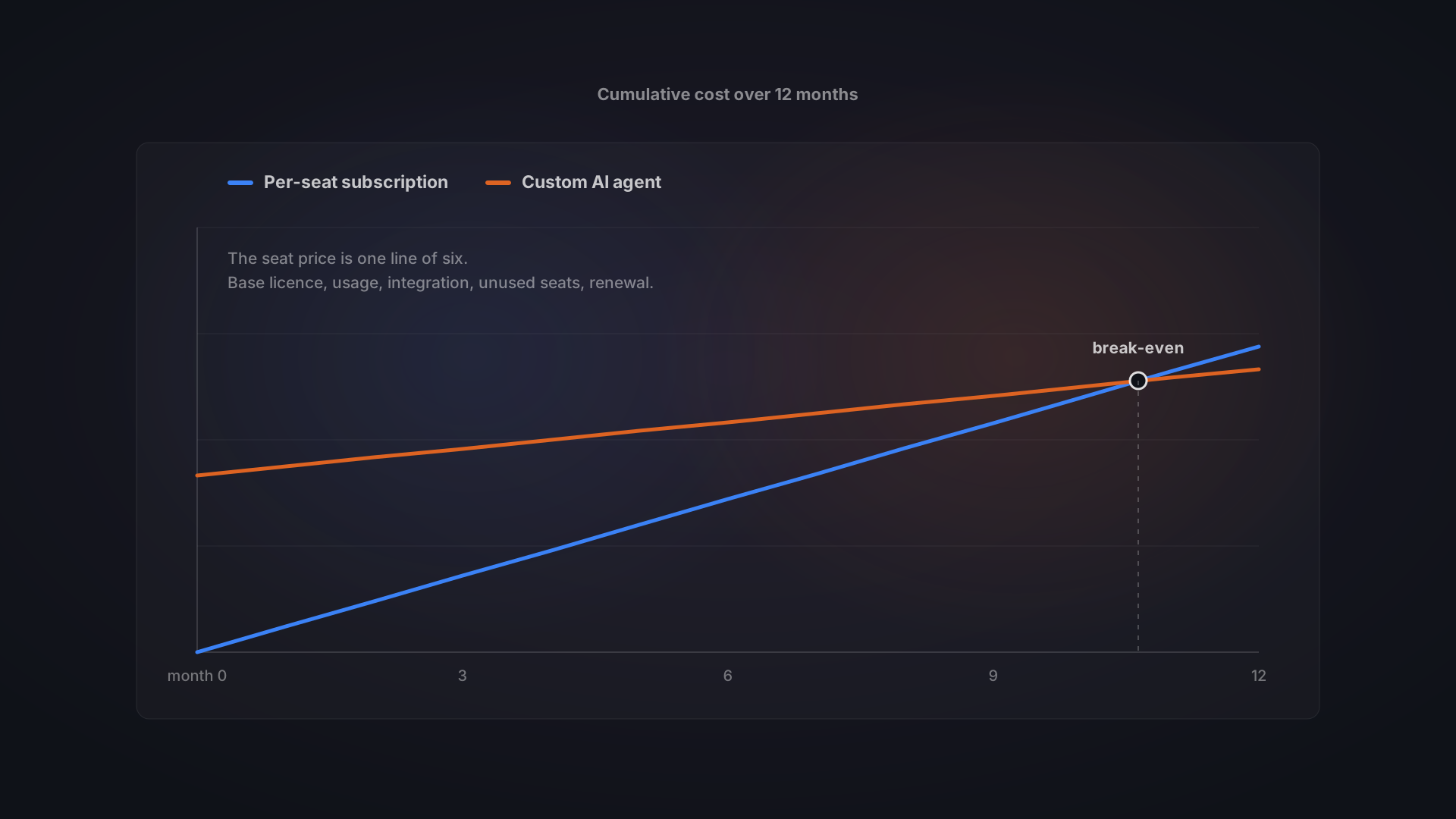
A boxed tool at, say, 250 to 500 CZK per user per month for a growing team, plus per-seat additions and higher tiers to unlock API access, adds up to a recurring cost that only ever goes one direction. Add the hidden cost of manual re-entry between disconnected systems, which is paid in staff hours, not licence fees.
A custom invoicing system is a larger one-time investment (custom software from Bitvea starts in the range covered in our custom software cost guide), with no per-seat fee and hosting in the low thousands of CZK per year. It gets relatively cheaper the more people use it, because the price does not scale with headcount. The crossover is usually somewhere past 15 to 25 active users, or earlier if integration is doing heavy lifting.
Ownership is the other half. With custom you own the code and the data, so no vendor roadmap or price increase decides your invoicing for you. That is the same logic behind custom CRM vs SaaS, applied to billing.
What a custom invoicing system looks like at Bitvea
We build the invoicing around the workflow you already have, then connect it to the systems that already hold your data:
- Integration first. It reads orders from your e-shop or CRM and books documents into Czech accounting systems like Pohoda, ABRA, or Money, so nothing gets typed twice.
- Your rules, in software. Approval thresholds, recurring and usage-based billing, multi-entity, multi-currency: modelled once, then automatic.
- Compliance built in. DPH, kontrolní hlášení XML, and ISDOC output, ready for the B2B e-invoicing timeline.
- You own it. No per-seat fee, no lock-in. The code and the data are yours.
This usually starts as part of a broader custom software or ERP build, because invoicing is rarely an island. It is one step in order-to-cash.
When off-the-shelf is still the right call
Honesty matters more than a sale here. Stay on Fakturoid, iDoklad, or a similar tool if your invoicing is straightforward and low-volume, a small team issues invoices and per-seat cost is not meaningful yet, you do not need deep integration with other systems, and your process fits the tool without workarounds. If that is you, custom is a cost with no return yet. Revisit the decision when two or three of the six signs above show up together.
Frequently Asked Questions
Is a custom invoicing system worth it, or is an off-the-shelf tool enough?
For simple, low-volume invoicing by a small team, off-the-shelf is enough and cheaper. Custom becomes worth it when per-seat fees stack up, you need real integration with your ERP or CRM, your billing logic does not fit a fixed tool, or you run multiple entities.
How much does it cost to build a custom invoicing system?
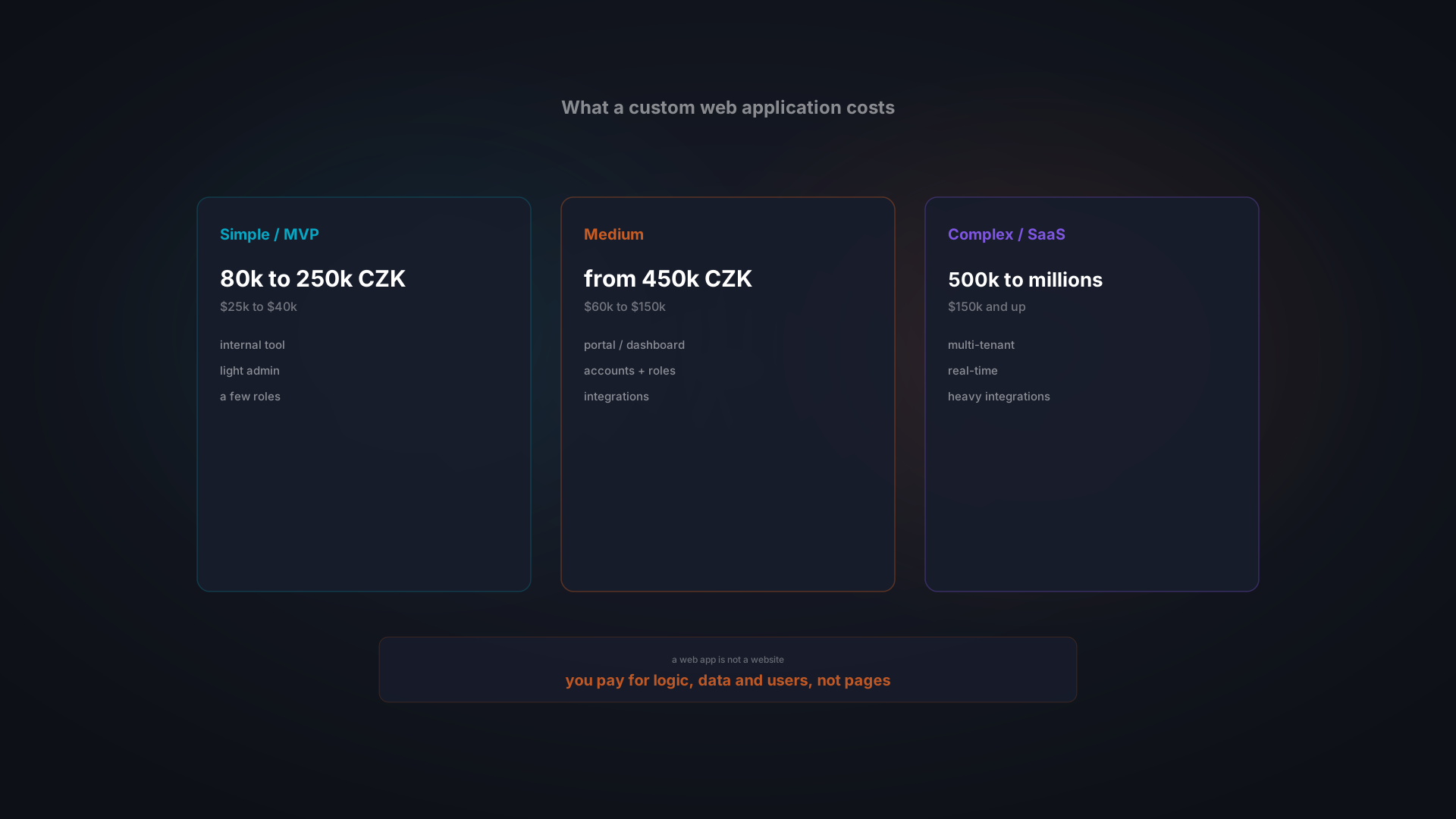
It is a one-time investment rather than a subscription, and it scales with integrations and billing complexity, not with the number of users. Our custom software cost guide walks through the drivers. Because an invoicing system is a tool the team opens in a browser, the tiers in the web application cost guide map onto it closely.
Can it integrate with my accounting and ERP?
Yes. That is usually the reason to build it. It can read orders from your e-shop or CRM and book documents into Pohoda, ABRA, Money, or a custom ERP.
Does it handle Czech VAT and kontrolní hlášení?
Yes. Any serious invoicing system, boxed or custom, has to. A custom build generates the daňový doklad, the kontrolní hlášení XML, and ISDOC output.
Is e-invoicing mandatory in the Czech Republic?
For public-sector (B2G) invoices, yes. For B2B it is not mandatory yet, but under EU ViDA rules structured e-invoicing arrives for intra-EU B2B in 2030 and Czech domestic B2B around 2035.
Do I own the code?
Yes. With a custom system you own the code and the data outright, with no per-seat fee and no vendor lock-in.
The bottom line
Off-the-shelf invoicing is the right start, and for many businesses the right forever. The moment to look at a custom invoicing system is when invoicing stops being a single task and becomes a workflow that crosses your other systems, when per-seat fees creep, and when your process no longer fits the tool. At that point custom usually costs less over five years and removes the manual re-entry that quietly eats your team time.
Think you are near that point?
Tell us your challenge and we will give you a straight answer about whether a custom build pays off for you yet. Book a free consultation.