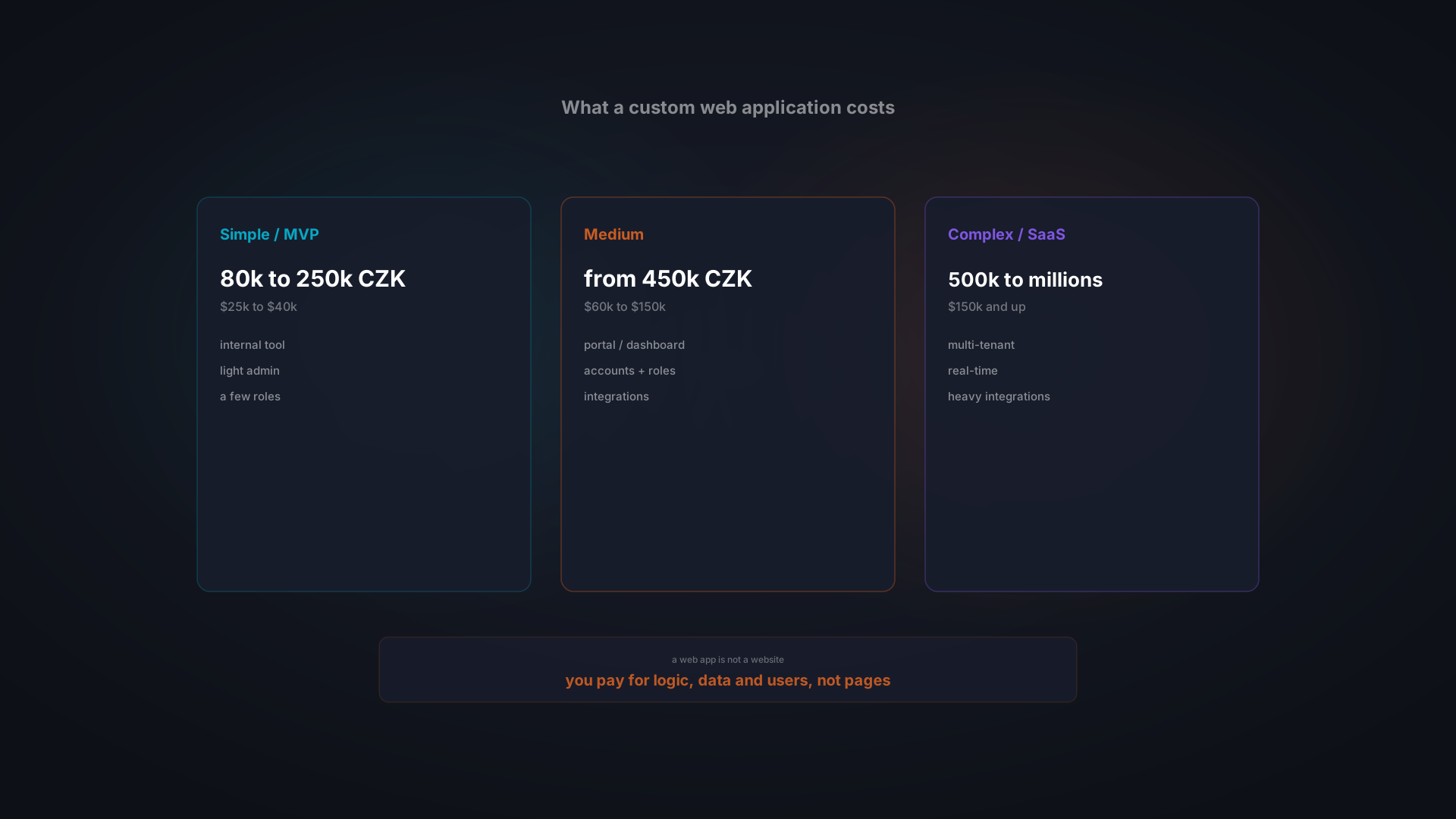
Custom software in 2026 starts at roughly 80,000 CZK for a simpler system and climbs into the hundreds of thousands or millions for complex business platforms. No one can quote an exact number cold, because "custom software" is not one product. It is work, and work is priced by scope, not by a shelf tag.
Most companies ask about price because they have already hit a ceiling. An off-the-shelf tool cannot do what they need, spreadsheets are overflowing, half a process runs by hand. "How much will it cost" is really "is it worth it." This guide gives you real numbers, shows what drives the price up, how it is calculated, and when a higher one-time investment beats a monthly subscription.
Key takeaways
- Custom software starts around 80,000 CZK (a simpler CRM) and passes a million for complex systems.
- Price is set by scope: number of features, integrations, logic complexity, and data volume, not the vendor's brand.
- Agency hourly rates sit around 1,100 to 1,600 CZK; lighter work costs less.
- For growing teams, a one-time build usually pays back against SaaS in two to three years.
- The best way to cut cost is to start small: one painful process, a pre-built base, phased development.
What Actually Drives the Cost of Custom Software
Price does not depend on the vendor's name. It depends on how much work the system needs. Four things decide almost everything.
Scope of features. An app that tracks orders and sends invoices is a different league from a platform that runs inventory, shipping, returns, and reporting. Every screen, button, and rule takes time.
Integrations. Connecting to accounting, an e-shop, a payment gateway, or carriers can raise the price more than the core system. It depends on how good the other side's API is: a clean, documented interface takes days, a closed system can take a month.
Logic complexity. Two approval stages are cheap. Conditional routing, where an order behaves differently by customer, region, and warehouse, is expensive, because it must be designed, built, and tested.
Data volume and user roles. A system for five people is not the same job as one for a hundred people with different permissions, where a warehouse worker sees something different from the director.
When Martin, the owner of a mid-sized manufacturing company, described his dream of "one system for everything," the path became clear fast. Breaking it down showed that 70% of the value came from order tracking and an accounting link. The rest could wait. Instead of a million-plus estimate, we started at a fraction and expanded based on what proved out.
Prices by System Type
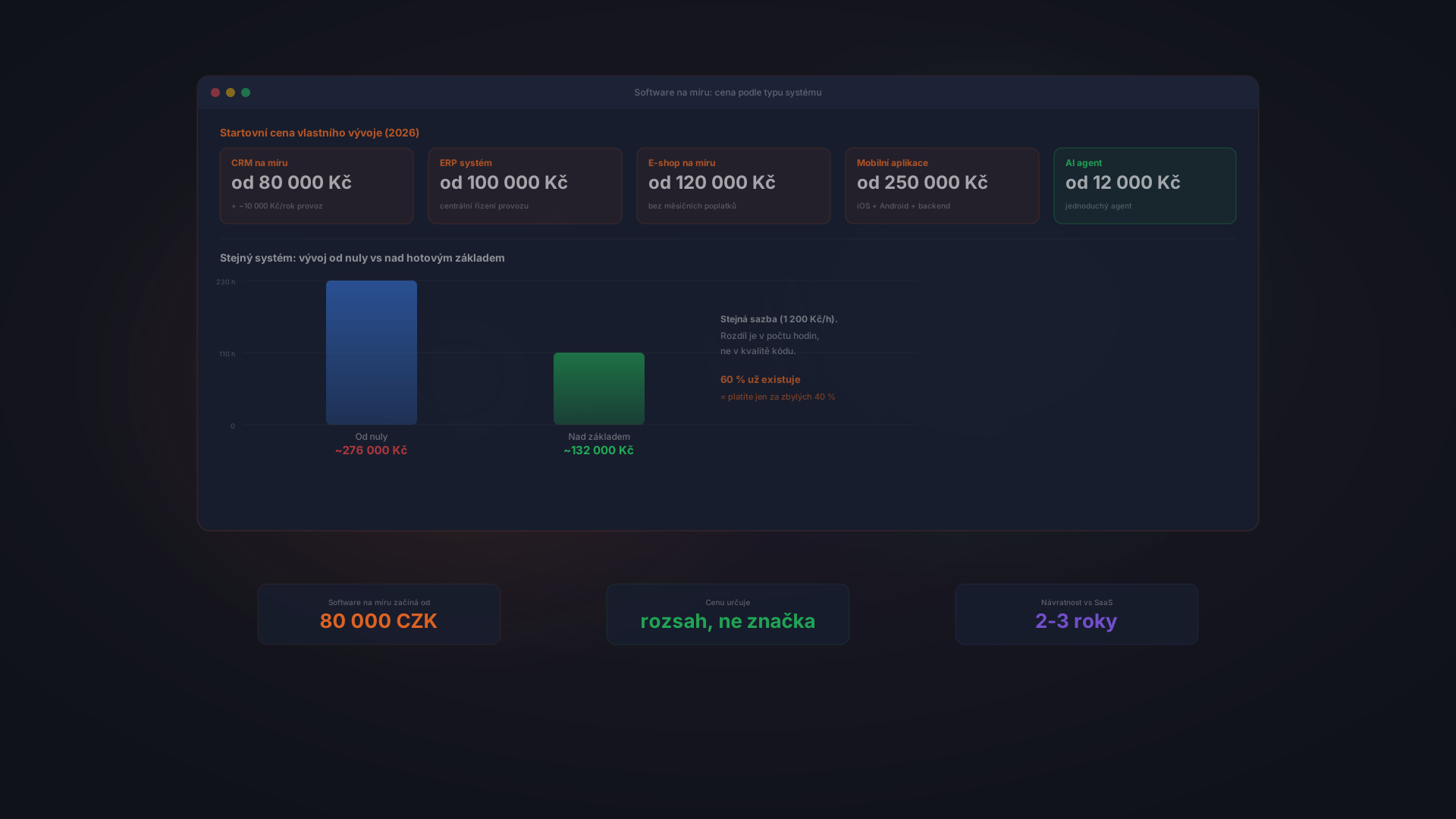
The fastest way to get your bearings is to look at specific system types. We cover each in depth; here is an overview with starting prices on the Czech market in 2026.
System type | Starting price (custom) | Typical yearly running cost |
|---|---|---|
Custom CRM | from 80,000 CZK | ~10,000 CZK |
ERP system | from 100,000 CZK | ~15,000 CZK |
Custom e-shop | from ~120,000 CZK | ~15,000 CZK |
Mobile app | from ~250,000 CZK | single to low tens of thousands CZK |
AI agent | from ~12,000 CZK (simple) | depends on usage |
These are starting figures, not final ones. They show where development begins, not where it ends for a complex brief. For a detailed breakdown of each category, see the dedicated guides: how much a CRM costs, how much an ERP costs, how much a custom e-shop costs, how much an AI agent costs, how much a web application costs, how much a mobile app costs, how much a penetration test costs, and mobile app development for field teams.
Still deciding whether a custom system makes sense at all? Read our custom software vs SaaS comparison, where we run the numbers five years out.
How the Price Is Calculated: Hours, Fixed Fee, or Pre-Built Base
Price is formed one of three ways, and it helps to know which you are signing up for.
Hourly rate. An agency bills time; Czech rates sit roughly between 1,100 and 1,600 CZK per hour. Work that does not need a senior developer, like content entry or testing, costs less, around 700 to 900 CZK. A freelancer runs cheaper than an agency but rests on one person and all the risk that carries. The hourly model is fair when the brief is still moving.
Fixed fee. You agree scope and price up front. The upside is certainty; the downside is less flexibility, because every change becomes an add-on. It works when the brief is clear and stable.
Pre-built base with customization. This is how we build. You get a finished core and pay only for what gets tailored to your process. The price is lower and deployment faster, because nothing starts from zero. That is exactly why a custom system can start at 80,000 CZK instead of a quarter million.
A small company that reached out last year had a quote for an order-management system at 480,000 CZK from another vendor, built from scratch. On top of a pre-built base, we delivered the same functionality for under a third, because 60% of what they needed already existed. The difference was not code quality. It was how much had to be written again.
A Worked Example: How Hours Become a Price
Theory is fine, but a concrete number says more. Take a wholesaler with twelve people who wants an order-tracking system connected to inventory and accounting. We break the work into phases, estimate hours for each, then multiply by the hourly rate, say roughly 1,200 CZK.
Phase | Built from scratch | On a pre-built base |
|---|---|---|
Analysis and design | 40 h | 20 h |
Core development (orders, inventory) | 120 h | 40 h |
Accounting integration | 40 h | 30 h |
Testing and deployment | 30 h | 20 h |
Total | 230 h | 110 h |
Price (× 1,200 CZK) | ~276,000 CZK | ~132,000 CZK |
You can see where the money hides. It is not in the rate, which is the same in both columns. It is in the number of hours, and what cuts that most is the code you do not have to write again. The same system lands at a quarter million one way and half that the other, with no compromise on quality.
The estimate is also redone after analysis. The first figure is an indicative range; the exact price arrives once we know how many pipeline stages, integrations, and exceptions the system actually needs. That is why a serious vendor starts with questions, not a fixed price. Before you compare quotes, learn how to evaluate a development partner.
Hidden and Ongoing Costs to Plan For
Development is only the first number. To keep a system running and growing, more items appear that are easy to overlook.
- Hosting and operation. For smaller systems, single to low tens of thousands of CZK per year, depending on load.
- Maintenance and updates. Security patches, small fixes, compatibility with the surrounding tools. For a mid-sized app, often single-digit thousands of CZK per year.
- Development. Once it works, you want more features. Good news, but it is a cost, not a gift.
- Training and migration. Staff must learn the new system and data must move from the old one. Your team's time counts.
The good news: with custom software, maintenance is usually small against development. The big spend is the build itself; after that the system just runs, and you mostly pay for what you choose to add. That is the core difference from SaaS, where you pay forever and the price rises with every extra person.
Custom Software vs SaaS: When the Higher Price Pays Back
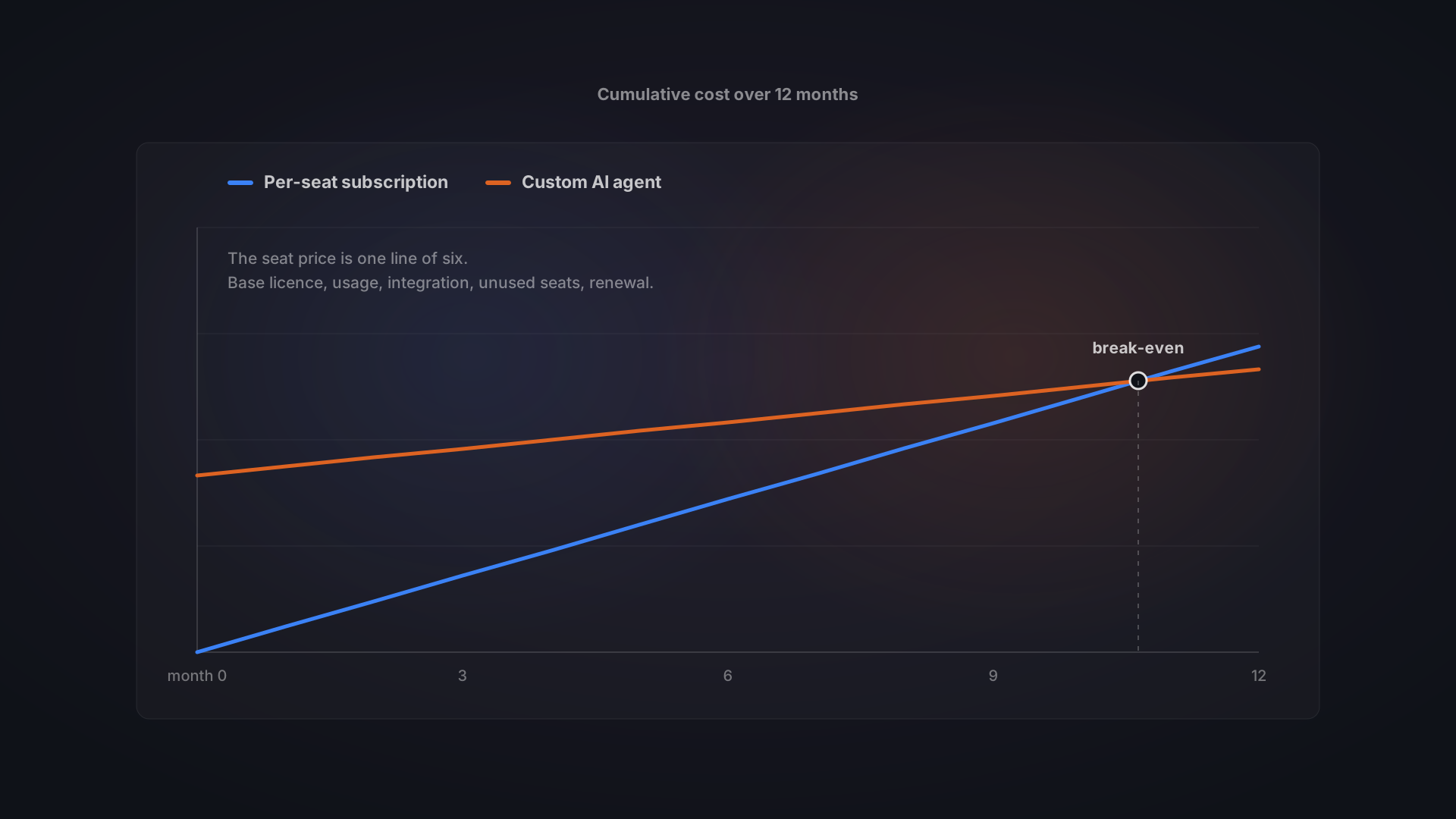
A custom system is a higher one-time investment; SaaS is a lower but endless monthly fee. The question is not "what is cheaper today" but "what is cheaper over five years."
SaaS is faster and cheaper for a small team with standard needs. But the price multiplies with every extra user and creeps up each year. Custom software is the opposite model: you pay more up front, then hold a low fixed running cost, and headcount does not raise the bill.
For growing teams, the break-even usually lands between year two and year three. A company of fifteen paying per user often clears the value of a custom system sooner than expected. Add that you own a custom system, so no one can lock you in or hike the price overnight. We run the full math in the custom software vs SaaS comparison.
Not sure you have outgrown SaaS yet? We lay out the signals in 5 signs your business has outgrown its tech stack.
What Inflates the Price Unnecessarily
Before we get to cutting the price, it helps to know what most often pushes it up. Overpriced projects tend to share the same causes.
A brief that changes mid-build. Every change during development means reworking what was already done. A few extra ideas halfway through can add dozens of hours.
Trying to build everything at once. A system meant to do absolutely everything from day one is expensive to design, build, and test. Yet half those features often go unused in the first year.
Custom code where a ready service would do. A payment gateway, email sending, or maps are not worth building from scratch. Wiring in an existing service costs a fraction.
Over-engineering the edge cases. "What if a customer orders from three countries and pays in two currencies" is a fair question, just ask how often it actually happens. Handling rare exceptions often costs more than the core system.
A well-shaped brief sidesteps these traps. Which is exactly what the next section is about.
How to Lower the Price Without Losing Quality
A high price almost always means too much is being built at once. There is a smarter way.
Start with one painful process. Do not design a "system for everything." Solve the process that slows you down most, then expand based on results.
Use a pre-built base. When 60% of the functionality already exists, you pay only for the other 40%. It is the fastest way to cut both price and timeline.
Build in phases. The first version should work, not be perfect. You fund each next phase from the value the system already delivers.
Do not skimp on analysis. A few hours over the process up front saves dozens of hours of rework later. It is the cheapest part of the project with the highest return.
You do not need a finished specification. Just describe the problem. The rest is our job, and that is what ultimately shapes the price.
Frequently Asked Questions
How is the cost of custom software calculated?
Add up the estimated work (analysis, design, development, deployment) times the hourly rate, or agree a fixed fee for a set scope. Then add yearly running costs (hosting and maintenance). With a pre-built base, you pay only for customization, not for the whole system from scratch.
How much does the simplest custom software cost?
A simpler system, such as a CRM built on a pre-built base, starts around 80,000 CZK. A very small single-purpose app or AI agent can be cheaper.
What is the hourly development rate in the Czech Republic?
Agencies sit roughly between 1,100 and 1,600 CZK per hour. Freelancers are cheaper, but the project stands or falls on one person. Lighter work (content, testing) runs around 700 to 900 CZK.
Is custom software worth more than SaaS?
For a small team with standard needs, SaaS is faster and cheaper. For a growing team with specific processes, a custom system usually pays back in two to three years, and you own it.
How much does custom software maintenance cost?
For a mid-sized app, often single-digit thousands of CZK per year for hosting and basic upkeep. Against the build cost, it is minor. The main post-launch spend is development, the features you order yourself.
Why do vendor estimates vary so much?
Because each one prices a different scope and depth. One quotes a build from scratch, another builds on a pre-built base, a third left integrations or data migration out of the number. Before you compare estimates, check that they describe the same brief.
Is the quoted price with or without VAT?
The figures in this guide are indicative and exclude VAT. Always confirm with a vendor whether the quote includes VAT; businesses that can reclaim it care mainly about the price before tax.
Do I need a finished specification up front?
No. Just describe the problem and how the process runs today. Designing the solution, scope, and price estimate is the vendor's job.
Conclusion: Price Is a Question of Scope, Not Brand
Custom software is not a fixed-price line item. It is work, and its price follows what the system must do: how many features, integrations, and rules you put in. It starts around 80,000 CZK and runs into the millions for large enterprise builds.
The smartest approach is not to start big. Solve one painful process, build it on a pre-built base, and expand based on what works. That keeps the price under control and gives you a system that pays back.
**Not sure where your project would land on price? Get in touch.** Describe the problem and we will scope it, and show what a custom system saves you against yet another subscription.