A custom mobile app for a business usually costs from around 120,000 CZK for a focused, single-purpose app to several million CZK for a complex one with real-time features and heavy integrations. In global terms, most SMB apps land somewhere between $50,000 and $120,000. The range is that wide because "a mobile app" can mean a simple internal tool or a full product, and the price follows the scope, not the label.
The honest problem with most cost guides is that they quote one number and stop. The build is only part of what you pay. This guide breaks down what actually drives the price, the ongoing costs most people forget, the native versus cross-platform decision that moves the number the most, and a realistic total cost of ownership over a few years.
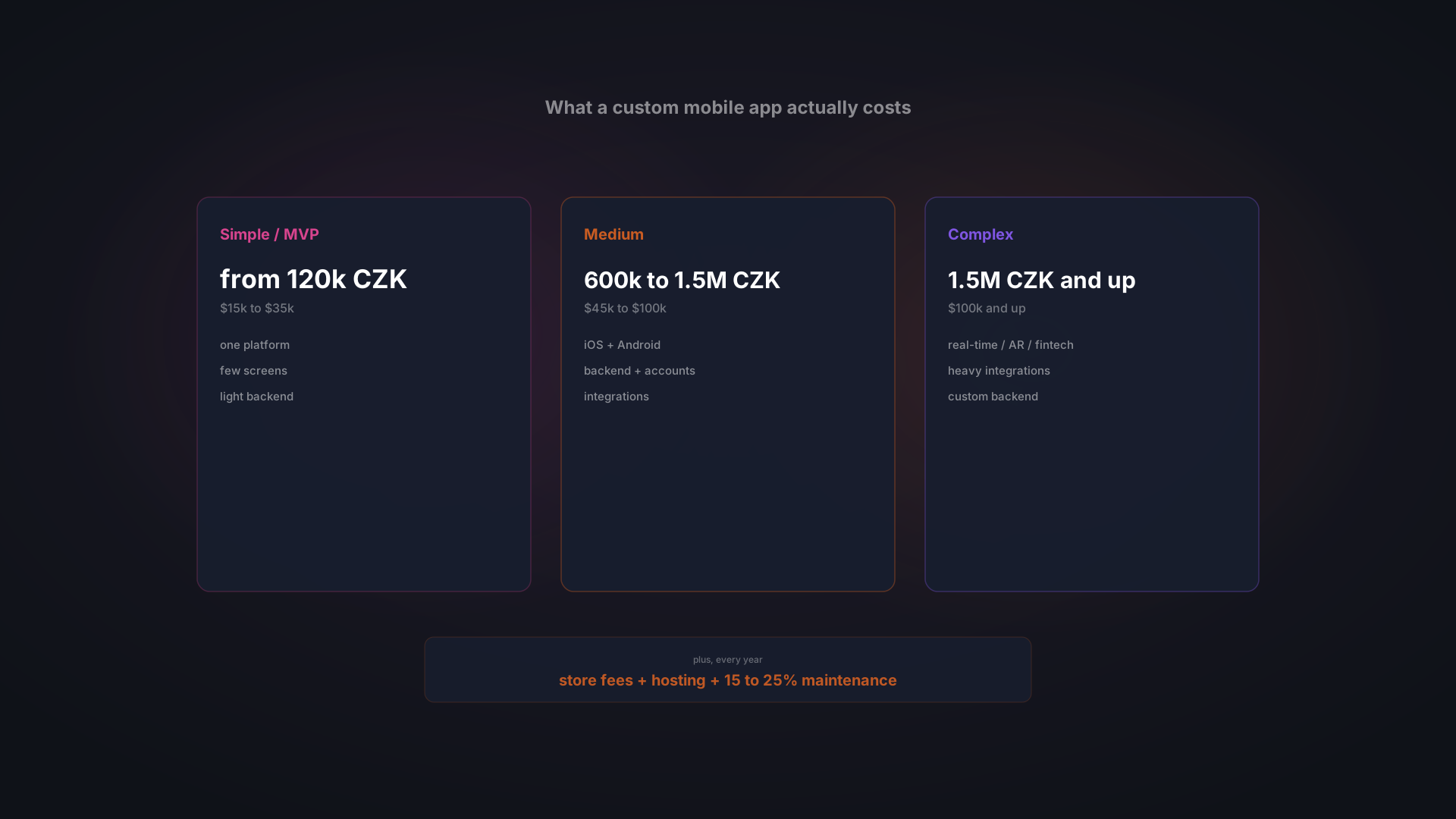
A simple, single-platform app or MVP starts around 120,000 to 300,000 CZK. A medium app for both iOS and Android with a backend and integrations runs roughly 600,000 to 1,500,000 CZK. Complex apps with real-time, AR, or fintech features go past 1,500,000 CZK. On top of the build, budget the Apple ($99/year) and Google ($25 one-time) developer fees, hosting, and 15 to 25% of the build cost per year for maintenance. Cross-platform is the main lever an SMB has to keep both the build and the upkeep down.
What actually drives the cost of a mobile app?
The final number is the sum of a handful of decisions, not a fixed price list. These are the ones that move it most:
- How many platforms. iOS only, Android only, or both. Two separate native apps is close to double the work of one.
- Native or cross-platform. Native (Swift, Kotlin) means a separate codebase per platform. Cross-platform (React Native, Flutter) shares one codebase across both.
- Backend and API. An app that just displays content is cheap. An app with accounts, sync, and its own server logic carries a backend cost on top.
- Integrations. Connecting to your CRM, ERP, payments, or a third-party API adds work for each connection.
- Design and screens. More screens and custom design cost more than a small app on standard components.
- The hard features. Offline sync, real-time updates, push notifications, in-app payments, and maps each add real time.
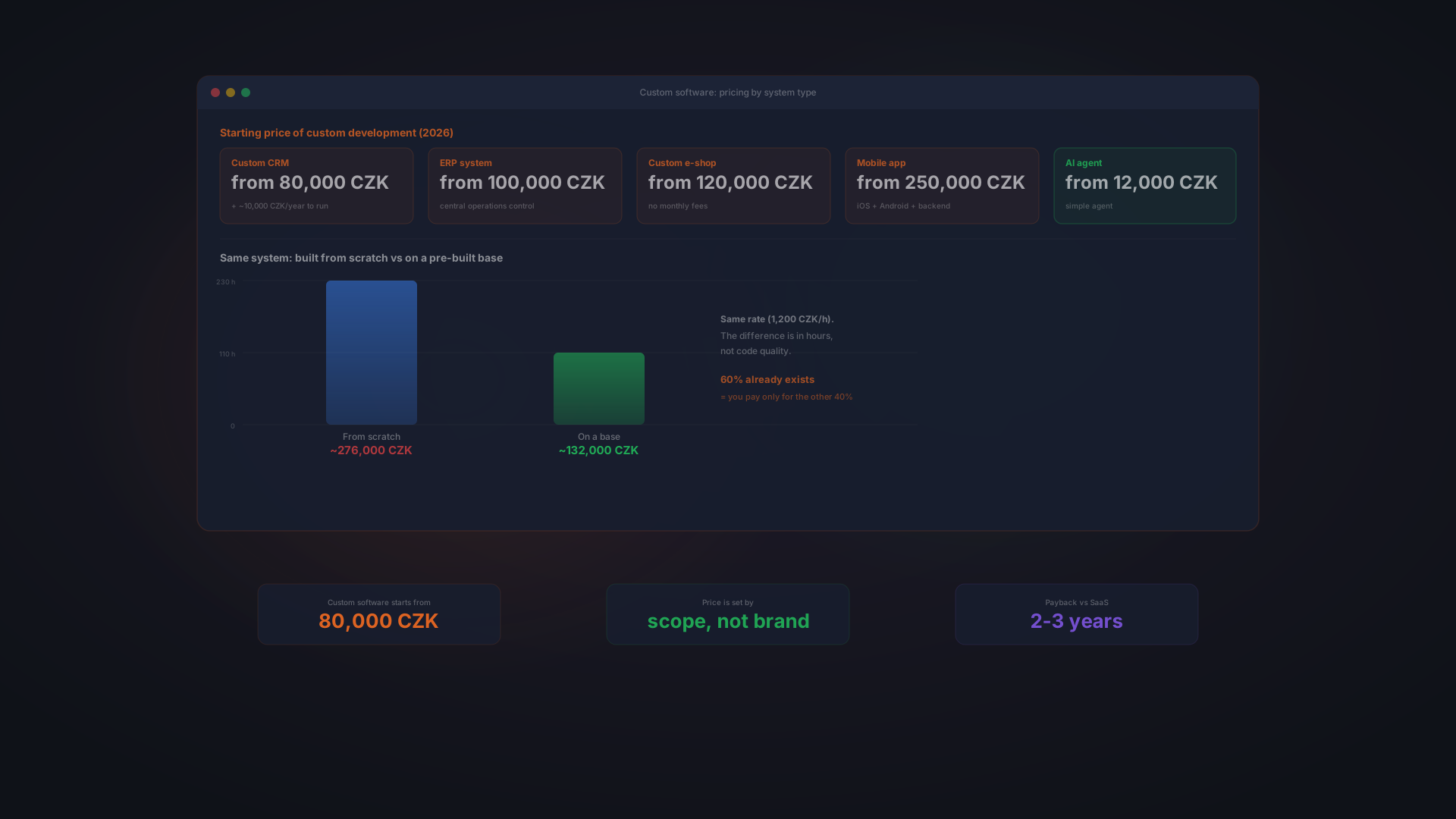
This is the same logic as any custom build, laid out in our custom software cost guide. An app is one shape of custom software, so the drivers rhyme.
How much does a mobile app cost by complexity?
Here is a realistic tiered view. Treat these as ranges, not quotes: the Czech market varies a lot between agencies, and the real number depends on the decisions above.
Tier | What it is | Czech market (CZK) | Global (USD) |
|---|---|---|---|
Simple / MVP | One platform, few screens, light backend | from ~120 000 to 300 000 | $15,000 to $35,000 |
Medium | iOS + Android, backend, integrations, accounts | ~600 000 to 1 500 000 | $45,000 to $100,000 |
Complex | Real-time, AR, fintech, heavy integrations | 1 500 000 and up | $100,000 and up |
Sources: Czech agency pricing from reactive.cz and thinkeasy.cz; global tiers from The Droids on Roids. Bitvea builds mobile apps from around 120,000 CZK, at the focused end of this scale.
Native vs cross-platform: which is cheaper?
For most SMBs, cross-platform is the single biggest cost-control lever. Building two separate native apps means two codebases, two sets of work, and two things to maintain. A cross-platform app (React Native or Flutter) shares roughly 90% of its code across iOS and Android.
The trade-off in practice: a cross-platform build costs a bit more than a single native app, but far less than two native apps, and it usually cuts your yearly maintenance roughly in half because there is one codebase to update. Over three years the total-cost gap versus two native apps often grows larger than the difference in the original build price. Native still wins when you need the last bit of platform-specific performance or deep hardware features, but most business apps do not.
The costs people forget: fees, hosting, and maintenance
The build is a one-time number. Running the app is not. Budget for these from day one:
- Store fees. The Apple Developer Program is $99 per year and the Google Play Console is a $25 one-time fee (Apple, store fee overview). If you sell digital goods in the app, the stores also take a 15 to 30% commission.
- Hosting and backend. A managed backend (Firebase, Supabase) is cheap to start; a custom backend costs more but you control it. Figure low thousands of CZK per month, scaling with usage.
- Maintenance. Plan for 15 to 25% of the build cost per year to keep the app working through OS updates, device changes, and small improvements. The first year can run higher.
This is why the sticker price of the build is not the real cost. A cheap app that needs constant rework can cost more over three years than a well-built one that mostly runs itself. It is the same total-cost-of-ownership logic behind why custom software beats SaaS for growing businesses.
A worked example
Say a services company wants an app for its field team: log jobs, capture photos, work offline, sync back to the office system. That is a medium app: two platforms, a backend, one integration, offline support. Built cross-platform, it sits in the mid-range rather than the high end, and one codebase keeps the yearly maintenance manageable. Compare that to two native apps for the same features, where both the build and every future update are paid twice. For a team that lives in the field, the app pays for itself in the hours it saves, which is the real test. Our post on mobile apps for field teams walks through that use case.
When is a template or no-code app enough?
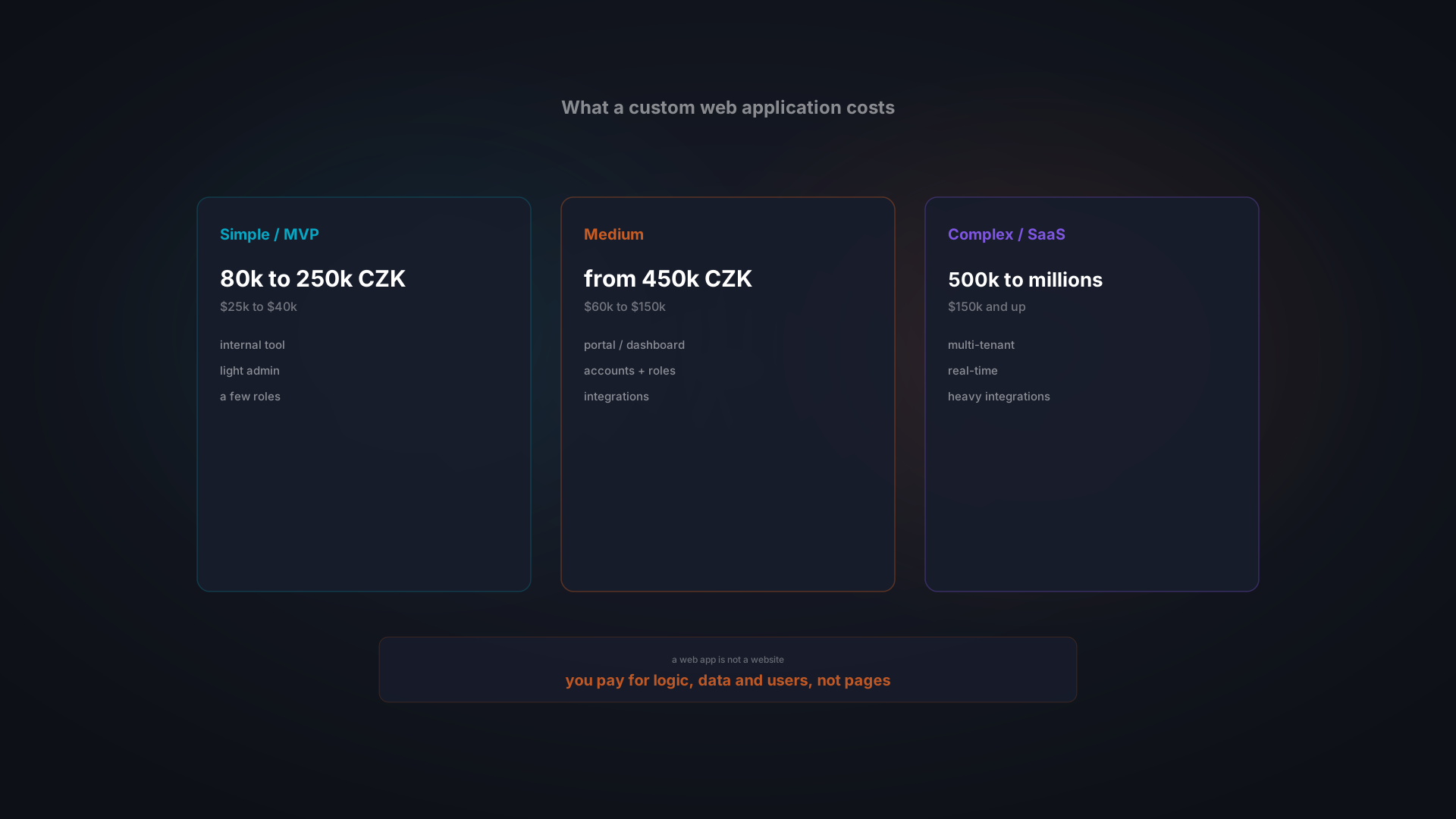
Custom is not always the answer. Neither is a phone app: if your people work at a desk, a browser-based tool is usually cheaper to build and to run, and the web application cost guide puts real numbers on it. If you need a simple app fast, the features are standard, and you are still testing whether an app is worth it at all, a template or no-code builder can prove the idea cheaply. Move to a custom build when the app has to fit your specific process, connect to your systems, handle real data volume, or become something you own rather than rent. If you cannot yet describe what makes your app different from an off-the-shelf one, start cheap and revisit.
Frequently Asked Questions
How much does it cost to build a simple app or MVP?
A focused, single-platform app or MVP typically starts around 120,000 to 300,000 CZK (roughly $15,000 to $35,000), depending on how many screens it has and whether it needs a backend.
Is React Native or native development cheaper?
Cross-platform (React Native or Flutter) is usually cheaper overall than building two separate native apps, because one codebase covers both iOS and Android and cuts maintenance roughly in half. Native costs more but makes sense when you need maximum platform-specific performance or deep hardware access.
How much does it cost to build for both iOS and Android?
With a cross-platform framework, both platforms come from one build, so you are not paying twice. Two separate native apps roughly double the build and the ongoing maintenance, which is why most business apps go cross-platform.
How much does it cost to maintain an app per year?
Plan for 15 to 25% of the build cost per year. That covers keeping the app working through operating-system updates, new devices, security fixes, and small improvements. The first year can run higher as you polish based on real usage.
How much are the App Store and Google Play fees?
The Apple Developer Program is $99 per year. The Google Play Console is a $25 one-time registration fee. If you sell digital goods through the app, the stores also take a commission, commonly 15% and up to 30%.
How long does it take to build a mobile app?
A simple app or MVP is usually a few weeks to a couple of months. A medium app with a backend and integrations runs a few months. Complex apps take longer. Timeline and cost move together, because both follow the scope.
The bottom line
A mobile app costs what its scope costs. A focused app starts around 120,000 CZK; a full product with real-time features and integrations runs into the millions. The number that matters is not the build price alone but the total over a few years: build, store fees, hosting, and maintenance. For most SMBs, going cross-platform and building only the features you actually need is how you keep that total sensible.
Want a real number for your app?
Tell us what the app needs to do and we will give you an honest range, including whether a simpler approach would serve you better. Book a free consultation.
Part of a topic guide