Almost every Czech company starts the same way: invoices in Pohoda or Money, stock in a spreadsheet, orders in the e-shop, and the founder holding it all together in their head. For years that works. Then the business grows, and one day the admin to keep it running starts eating the time that should go into selling.
The problem is not Pohoda or Money. They are good at what they do. The problem is asking an accounting program to run operations it was never built for. Here is how to tell you have reached that point, what waiting costs, and what to do about it.
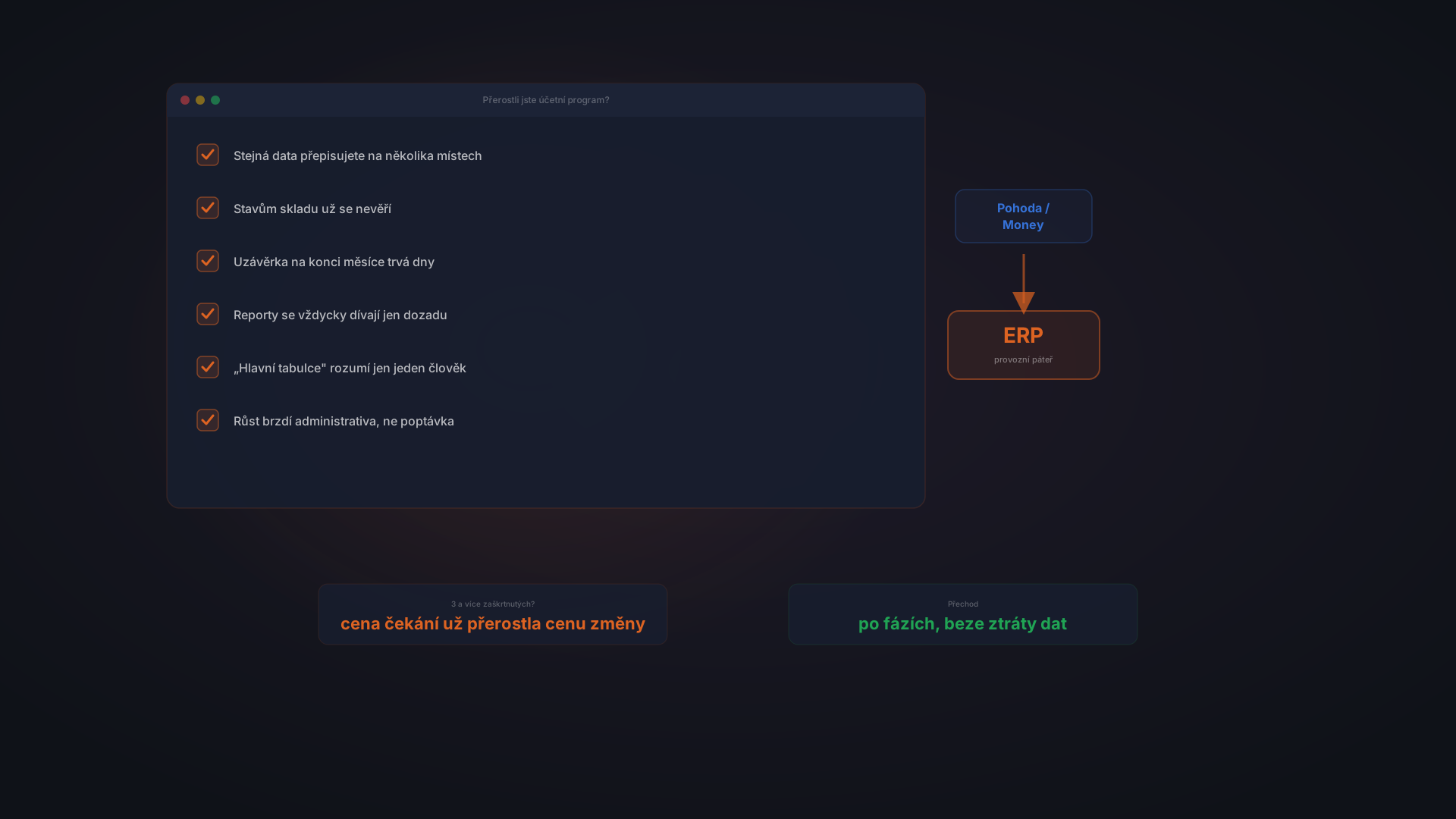
The Signs You Have Outgrown Your Accounting Program
- You re-type the same data in several places. An order from the e-shop gets keyed into accounting, then into a stock sheet. Every copy is a chance to get it wrong.
- Stock numbers are not trusted. People call the warehouse to check instead of believing the system, because sync runs overnight or by hand.
- Month-end takes days. Closing the books means stitching exports from three tools into one spreadsheet.
- Reporting is always backward-looking. You learn what happened last month, not what is happening now.
- Workarounds have names. There is a "master spreadsheet" only one person understands, and the business stops if they are away.
- Growth is capped by admin, not demand. You could sell more, but you cannot process more without hiring purely to keep up.
The Specific Wall with Pohoda and Money
These programs are accounting-first. As operations get complex, the same limits show up: weak or manual links to the e-shop and warehouse, no real production planning, basic reporting, and customization that stops where the product stops. None of that is a flaw, it is simply the edge of what an accounting tool is meant to do. An ERP is the category built for the operations beyond that edge. If you are new to the term, start with what an ERP system is.
The Cost of Waiting
Staying too long has a price that does not appear on any invoice. It is the orders that slip because stock was wrong, the hours spent reconciling instead of selling, the extra hire whose whole job is manual data entry, and the decisions made on last month numbers. For a growing company, that quiet leakage usually grows faster than the cost of fixing it.
What to Do Next
Reaching this point does not automatically mean a big custom project. The right move depends on your complexity:
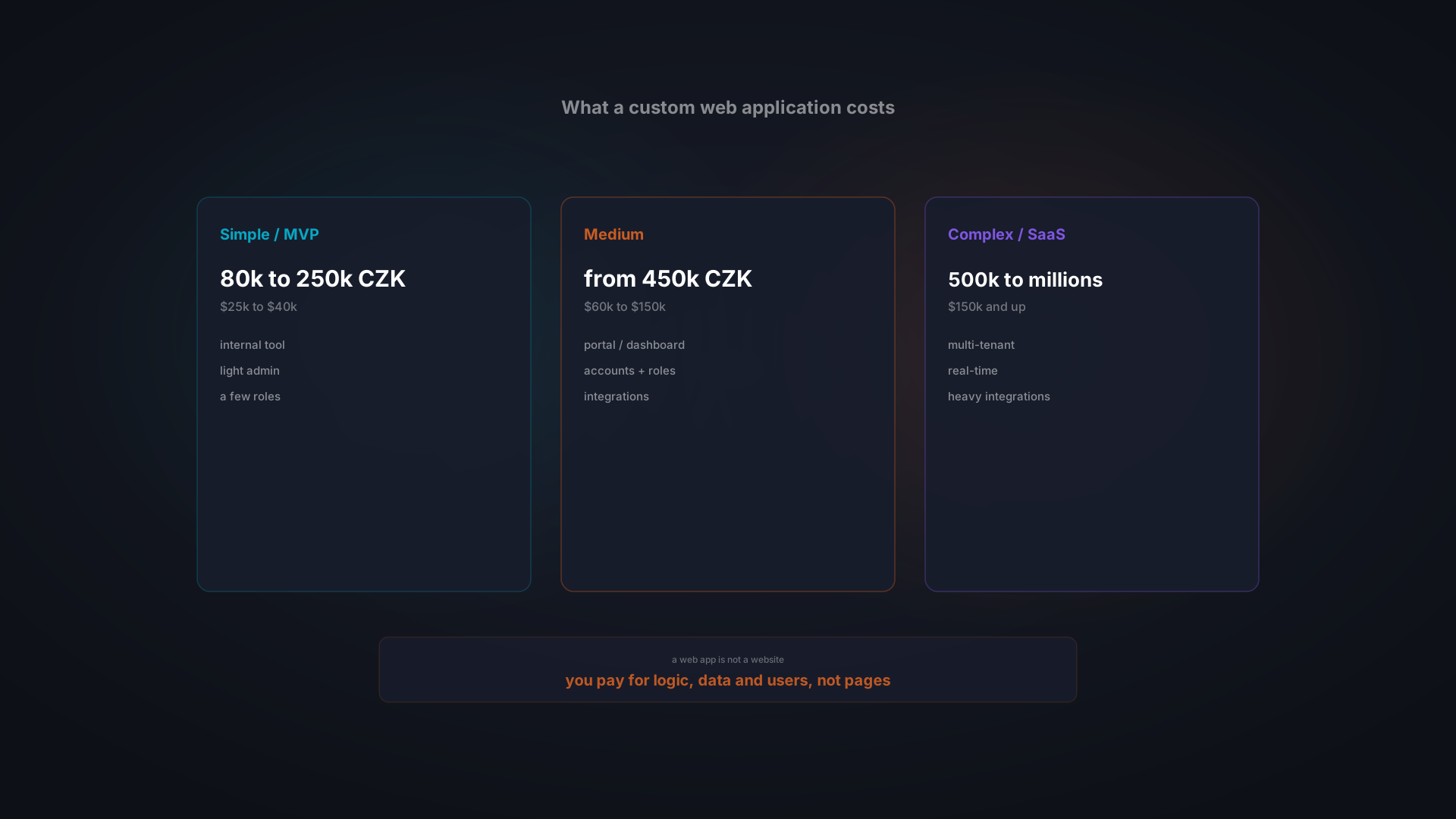
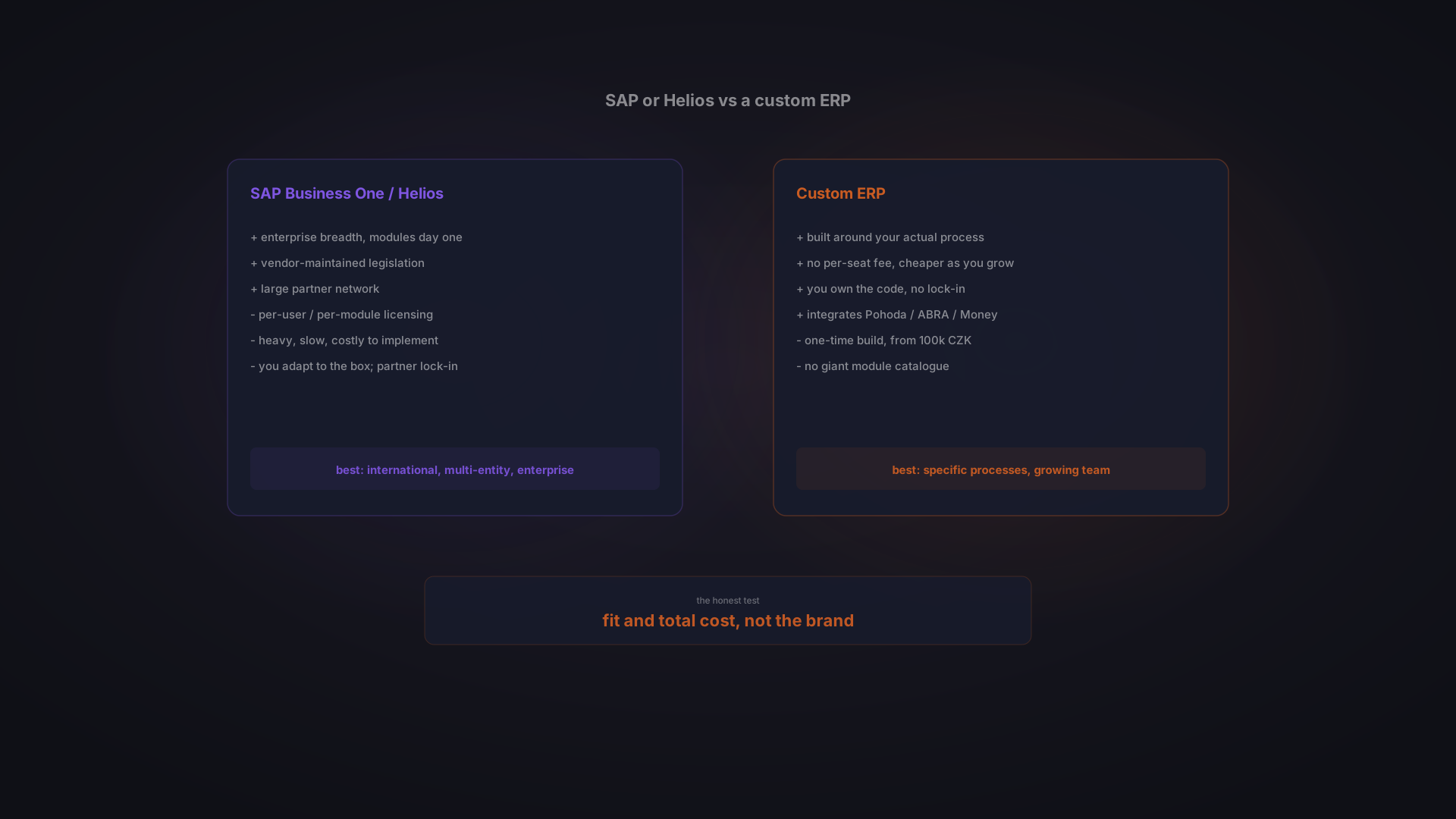
- Standard processes, want speed: a boxed or cloud ERP (ABRA, Helios, SAP Business One) can be live quickly
- Specific processes or heavy integrations: a custom or hybrid ERP fits your workflow and connects your e-shop, accounting, and warehouse directly
- CRM and ERP needs together: one custom system is often cheaper than buying and integrating two
We compare the trade-offs in custom ERP vs off-the-shelf, and the numbers for each route are in the ERP pricing guide.
How the Transition Works
You do not switch everything overnight. A sensible move keeps your accounting where it is at first, connects the new system to it, and migrates operations (stock, orders, purchasing) in phases. Data from Pohoda or Money can be carried over, and the old setup runs in parallel until the new one is proven. The goal is no day where the business cannot ship.
Frequently Asked Questions
Do I have to replace Pohoda or Money completely?
Not necessarily. Many companies keep their accounting program and connect an ERP or custom system around it for stock, orders, and production. Whether to fully consolidate later is a separate decision once the operational pain is solved.
At what size do companies usually need an ERP?
There is no fixed headcount. The trigger is complexity, not size: multiple systems that must agree, a warehouse, production, or growth that admin is starting to cap. Some 10-person firms need one; some 40-person firms do not.
Is a custom ERP overkill for a smaller company?
Often, yes, and we will say so. A boxed product is the right call for standard operations. Custom makes sense when your processes are genuinely specific or integrations are the whole point.
In Short
Outgrowing Pohoda or Money is a good problem, it means you are growing. The signs are concrete: duplicated data, untrusted stock, slow month-end, admin capping growth. When several are true, the cost of waiting has usually overtaken the cost of moving.
Think You Have Outgrown Your Setup?
We will look at how you work today and tell you honestly whether you need an ERP yet, and if so, which kind.
Book a free consultation and we will go through your operations together.