A growing company usually does not decide to buy an ERP. It reaches a point where the spreadsheets, the accounting program, the warehouse notes, and the e-shop no longer agree with each other, and someone spends a day a week reconciling them. An ERP is what replaces that reconciliation with one system everyone shares.
This guide explains what an ERP system actually is, what it does day to day, the main types on the Czech market, and how to tell whether your business needs one. No jargon, no sales pitch.
What Is an ERP System?
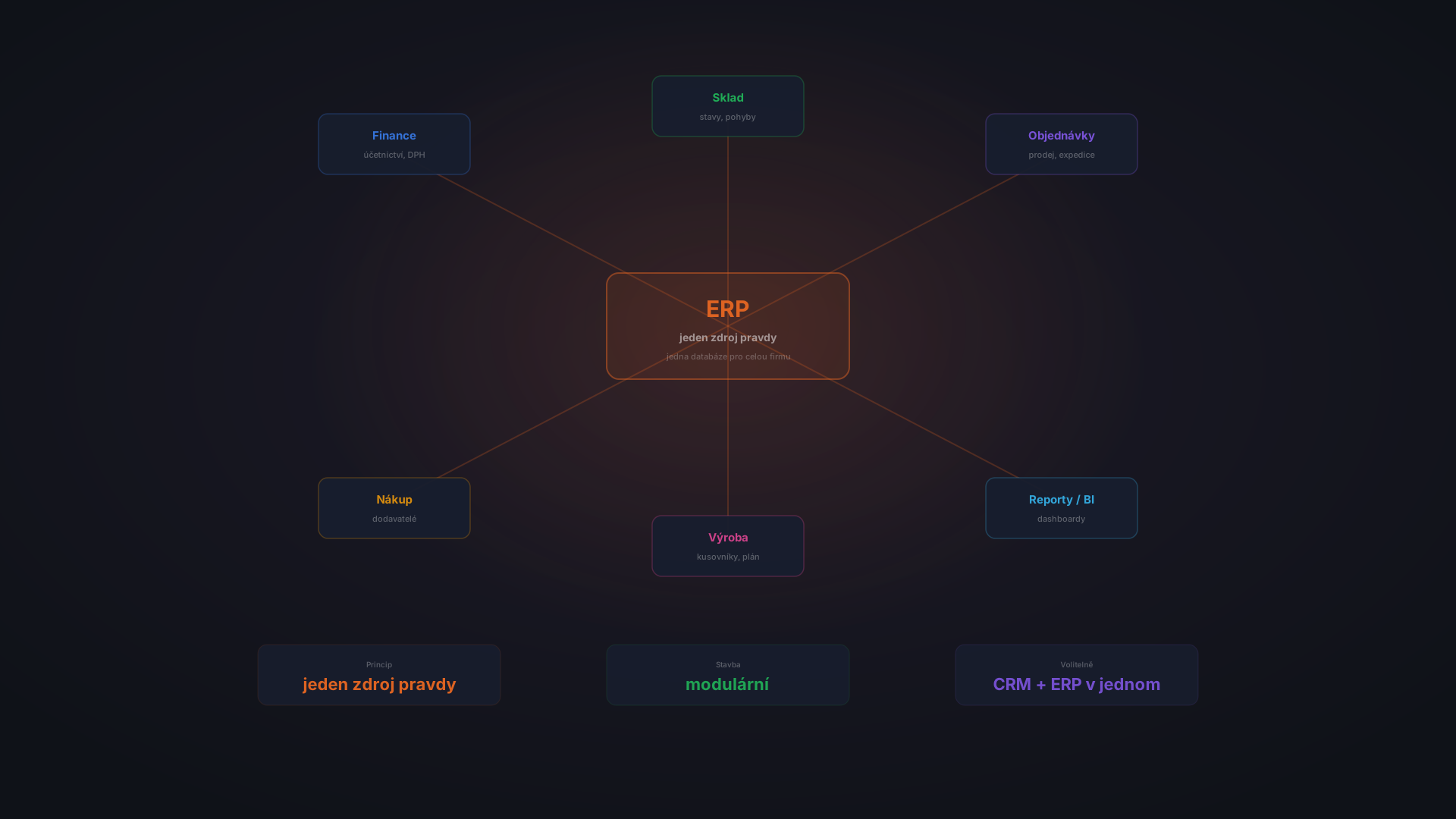
ERP stands for Enterprise Resource Planning. In plain terms, it is a single system that runs the operational core of a company: finance and accounting, inventory and warehousing, purchasing, sales and orders, and often production and HR. Instead of each department keeping its own data, everything lives in one database with one source of truth.
The difference from a pile of separate tools is the connection. When a sale is recorded, stock goes down, the invoice is created, and the financial report updates, all from the same event. Nobody re-types the order into accounting, and nobody guesses whether the warehouse number is current.
The Core Modules
Most ERP systems are built from modules. You usually start with the ones you need and add more later:
- Finance and accounting: ledger, invoicing, VAT, cash flow, reporting
- Inventory and warehouse: stock levels, locations, movements, stocktaking
- Purchasing: suppliers, purchase orders, goods receipt
- Sales and orders: quotes, orders, fulfillment, returns
- Production (for makers): bills of materials, planning, capacity
- HR and payroll: employees, attendance, wages
- Reporting and BI: dashboards that pull from all of the above in real time
ERP vs CRM: What Is the Difference?
People often confuse the two. A CRM manages relationships and sales: leads, deals, customer history. An ERP manages operations and resources: money, stock, orders, production. They overlap at the point a deal becomes an order, which is exactly why connecting them, or running both in one custom system, matters so much. For the CRM side, see our guide to what a CRM is.
Boxed, Cloud, or Custom ERP
On the Czech market you will meet three broad options:
- Boxed / desktop (Pohoda, Money): cheap and quick, strong on Czech accounting, limited for complex workflows
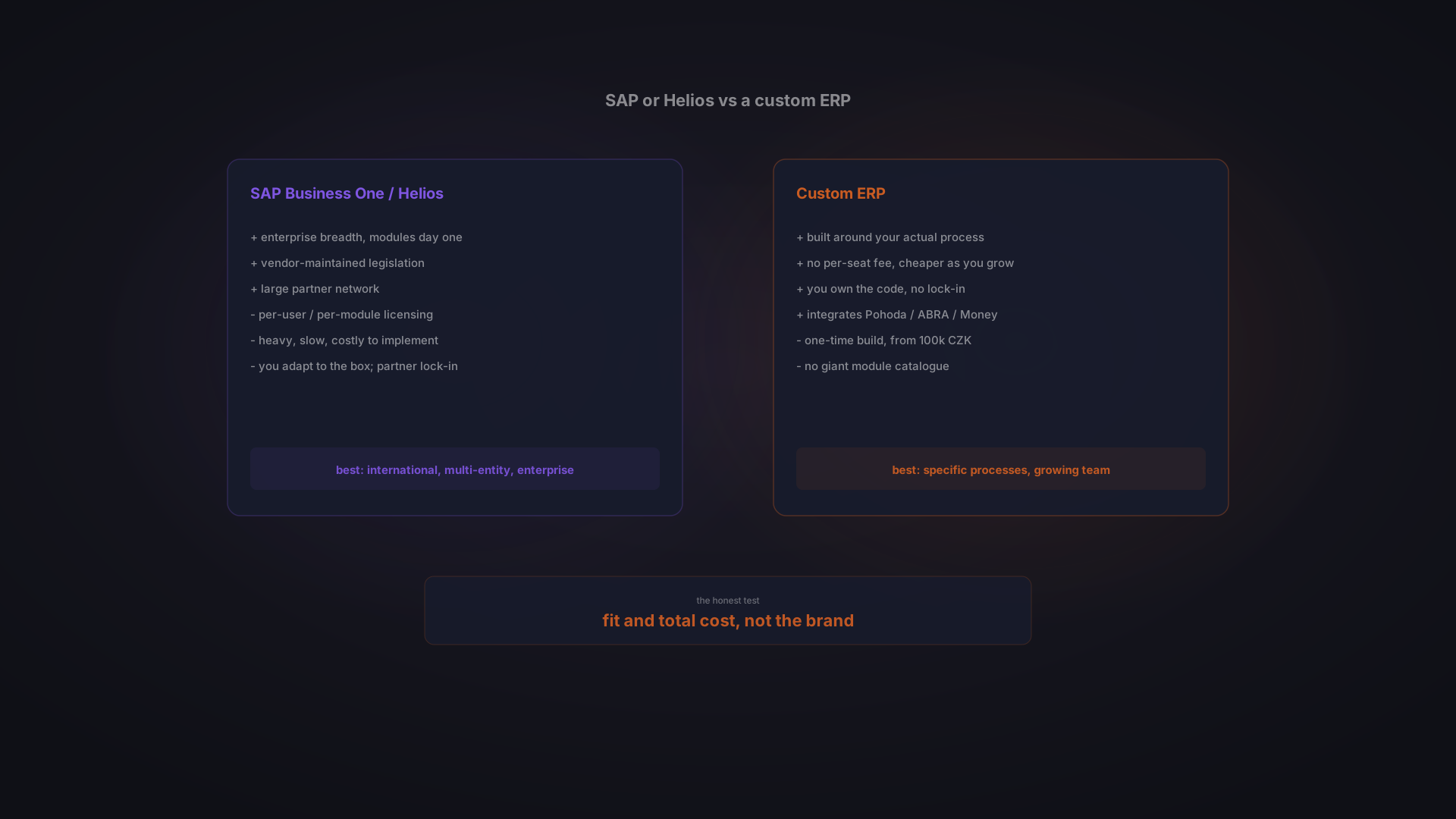
- Cloud / modular (ABRA, Helios, SAP Business One, Odoo): more capable, priced per user and per module, scales further
- Custom / hybrid: built around your processes, no per-user fee, you own the code; higher upfront cost, best fit and integrations
Which one fits depends on size, process complexity, and how much you need to integrate. We compare the trade-offs in detail in custom ERP vs off-the-shelf.
How Do You Know You Need an ERP?
You rarely need an ERP on day one. The usual signals appear as you scale:
- The same data is keyed into several tools (accounting, e-shop, warehouse) by hand
- Stock numbers are wrong often enough that people stopped trusting them
- Month-end reporting takes days of stitching spreadsheets together
- Your accounting program cannot keep up with orders, warehouses, or production
- Growth is capped by admin work, not by demand
If several of these are true, the cost of not having an ERP has likely overtaken the cost of having one. We go deeper in signs your business needs an ERP.
What Does an ERP Cost?
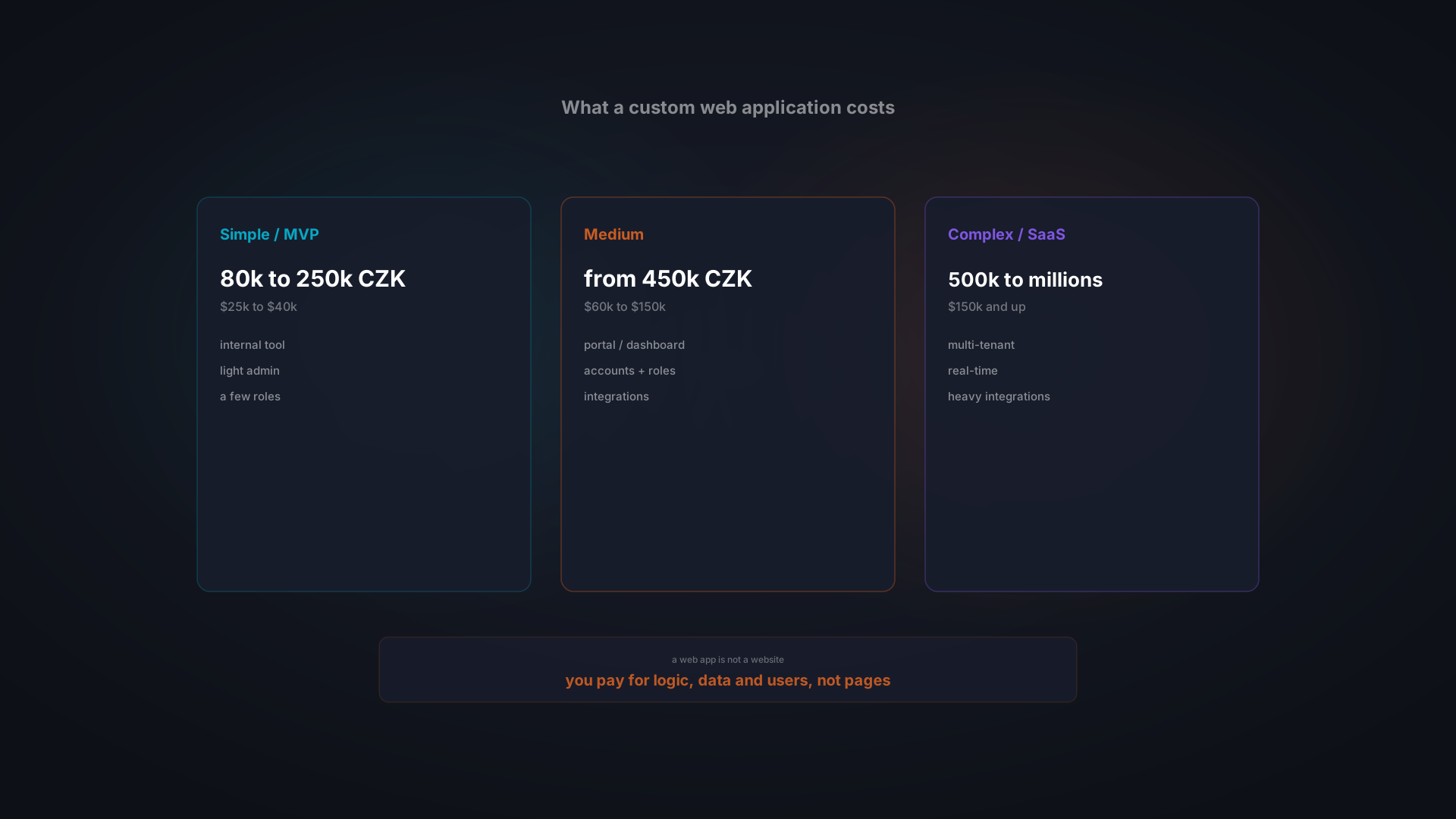
Boxed ERP starts low: Pohoda from around 15,000 CZK a year, Money from around 4,900 CZK. Per-user cloud systems like SAP Business One start around 2,200 CZK per user per month, and mid-size Helios or SAP deployments reach into the millions per year. A custom ERP starts from 100,000 CZK as a one-time build with no per-user fee. The full breakdown, including a 5-year total cost of ownership, is in our ERP pricing guide.
How Implementation Works
A boxed ERP can be live in weeks. A custom or hybrid build typically runs in phases over 3 to 6 months: discovery and process mapping, then the core modules, then integrations with your e-shop, accounting, and warehouse, then rollout and training. The phased approach means you use the core early rather than waiting for everything at once.
Frequently Asked Questions
What is the difference between ERP and accounting software?
Accounting software handles the books. An ERP handles the books plus stock, orders, purchasing, and often production, all connected. Programs like Pohoda and Money sit in between: strong accounting with light ERP features, which is why many Czech companies outgrow them as operations get complex.
What does a modular ERP mean?
Modular means you adopt only the parts you need now (say finance and inventory) and add more later (production, BI). With boxed ERP each module is a recurring cost; with a custom build you stage the investment over phases.
Can an ERP and CRM be one system?
Yes. For many growing companies a single custom system holding sales, operations, and finance is cheaper and cleaner than buying a separate CRM and ERP and paying again to integrate them.
In Short
An ERP is the operational backbone: one system, one source of truth, less manual reconciliation. Boxed tools fit smaller, standard operations; custom and hybrid systems fit companies whose processes and integrations have outgrown what a template can do.
Want to Know Which Fits You?
We map your processes and tell you honestly whether a boxed product is enough or a custom system would pay for itself.
Book a free consultation and we will walk through your operations and options.